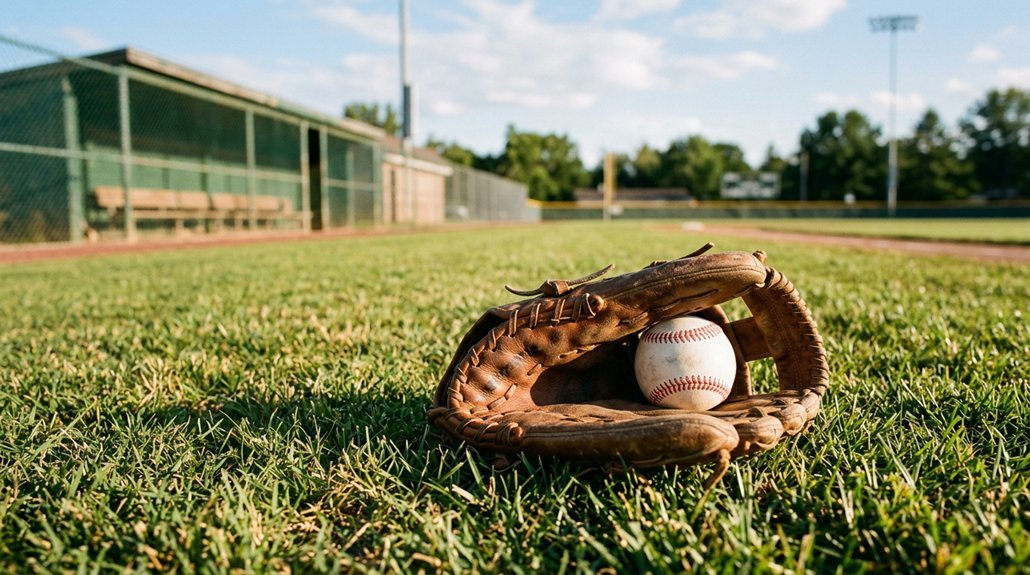
Teaching your kid to catch a baseball is like planting a seed; you water it with patience, and suddenly you’ve got something growing. You’ll need the right gear, smart drills, and a game plan that keeps frustration off the field.
Start with stance, build to soft tosses, pick a glove that actually fits small hands, then mix in grounders and pop flies before they know what hit them. The real secret? Keep it fun, or you’ll strike out before you begin.
Start With a Sturdy Stance for Catching a Baseball
Every great catch starts with your feet planted right. You stand with your feet shoulder-width apart and knees bent, creating a stable, athletic position that keeps you ready to move. This stance forms your foundation for every catch you’ll make.
Your glove size matters more than you’d think. A glove that’s too big swallows the ball; too small, and you’re fighting to squeeze it. For kids, measure from the tip of the index finger to the wrist, then match that length to the glove size in inches. Most youth players need 9 to 11 inches.
Keep your glove hand out front, open, with fingers pointing skyward. You’re not hiding; you’re inviting the ball in. Stay locked on that spinning leather, adjusting your body to match its path. When your stance’s solid, the rest follows naturally.
Recommended Products

DESIGNED FOR YOUTH BASEBALL PLAYERS | Ages 6-12

TRAINING GLOVE | Advanced fielding trainer with zero pocket design built to help fielders develop soft hands

DESIGNED AS A UTILITY GLOVE FOR ANY POSITION, this 10.5 inch Remix Series youth baseball & tball glove offers first-time players a lightweight and reliable option as they learn the fundamentals of defensive play
Build Confidence Catching Soft Tosses Before Real Baseballs
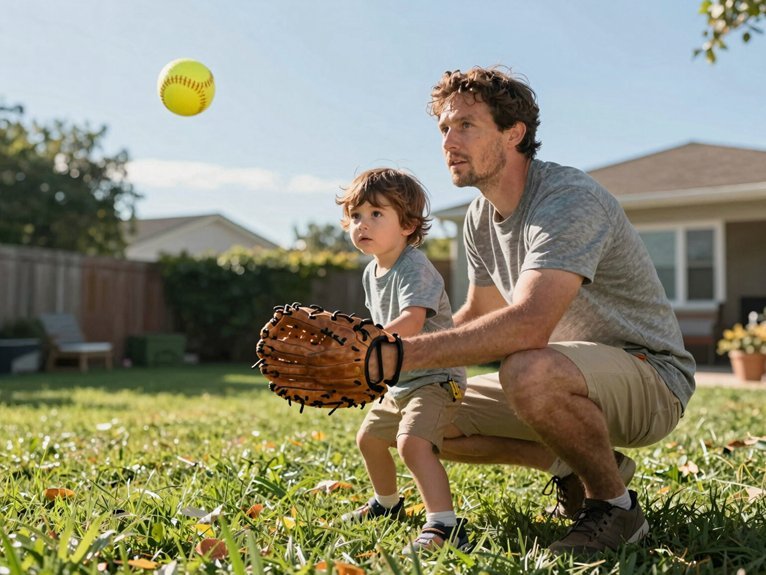
Why jump straight to hard leather when you’re still building trust? You’ll build catching confidence faster with soft tosses that feel friendly, not frightening.
Start with soft tosses that feel friendly, not frightening—building trust before the hard leather.
Start with underhand throws from just a few feet away. You’re teaching your kid to track the ball from your hand straight into their glove, eyes locked on that target the whole way. Keep that glove open, fingers pointing skyward, ready to receive.
Stand shoulder-width apart with knees bent, just like before. You’re creating a stable base that says, “I’ve got this.”
As soft tosses get easier, you’re gradually adding speed. Then swap in tennis balls before touching real baseballs. You’re building hand-eye coordination at a pace that feels manageable, not overwhelming.
Before long, you’ll watch that catching confidence grow with every successful grab.
Choose the Right Glove Fit for Young Hands
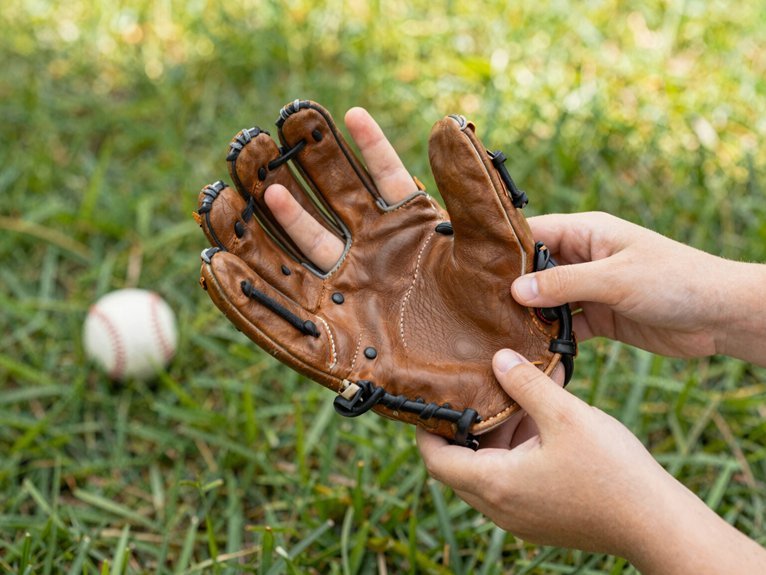
Once your kid is catching soft tosses with confidence, you’ll want to make sure their equipment isn’t working against them. A proper glove fit makes all the difference between frustration and success on the field.
Start with a youth glove sized specifically for small hands. You’ll know you’ve found the right fit when fingers move freely for quick reactions, yet the glove stays secure during play. Look for Small-to-Medium sizes appropriate for your child’s age.
Check that the pocket depth handles chest-to-waist catches comfortably. Prioritize durable stitching and a flexible web that supports various catch types.
Practice Grounders, Pop Flies, and Line Drive Catches
How do you turn a kid who can catch soft tosses into one who handles anything hit their way? You practice grounders, pop flies, and line drives until they’re second nature.
Grounders
Roll the ball low and slow. Step into it, bend your knee, and catch with your glove right on that bend. Keep your eyes locked on the ball until it’s secure.
Use both hands, then transfer fast to your throwing hand. No drops, no delays.
Pop Flies
Feet shoulder-width apart, knees bent, glove at chest level. Track the ball from bat to glove. Stay calm, stay ready.
Line Drives
Start soft, then build up. Short pops become higher arcs. You’ll simulate real trajectories and build timing.
Celebrate every clean catch. Confidence grows with each grab, and soon they’ll snag anything coming their way.
Recommended Products

The World Swuggling Record of 3.5 km. in open water was achieved with 70g XBalls by Speevers! We looked at everything you need for the perfect experience and developed the new and improved XBalls.

Lace-Up Design: These kids’ cleats are designed with a lace-up closure to provide a snug & extra secure fit which can be adjusted accordingly.
Stay Patient: Keep Teaching Catching Fun and Effective
Mastering grounders, pop flies, and line drives takes time, and pushing too hard too fast can backfire. You need to keep things fun, or your kid will start dodging practice like it’s a wild pitch.
Mastering grounders, pop flies, and line drives takes time—push too hard, and your kid will dodge practice like a wild pitch.
Start with soft tosses to build trust and squash fear. As confidence grows, you’ll gradually increase speed. This progressive training prevents overwhelm and keeps your young player eager for more.
Stay calm and proactive during sessions. Encourage your kid to track the ball and arrive with the glove ready. After each attempt, deliver patient, positive reinforcement. Celebrate the small wins, and you’ll boost comfort with every session.
Frame fundamentals as fun, foundational steps toward long-term success. With consistency and lighthearted encouragement, you’re not just teaching catches, you’re building a lifelong love for the game.
Recommended Products

NEWLY UPGRADED DESIGN: Jikbeed Baseball Bat has optimized the mesh and handle based on product features, and added a storage bag

THE FLYBALL 500 IS THE NATION'S MOST AFFORDABLE FLY BALL TRAINING AID ON THE MARKET: While most other tools available are either way more expensive or simply sends out knuckle ball after knuckle ball not giving the true simulation of a batted fly ball.

Coach highly recommended: Easier to use than a traditional fungo bat, ergonomic for better handling and the racket design, 1.18 lbs fungo racket features scientifically balanced weight distribution that reduces arm fatigue during extended practice sessions, making it ideal for coaches running multiple fielding drills and parents practicing with kids