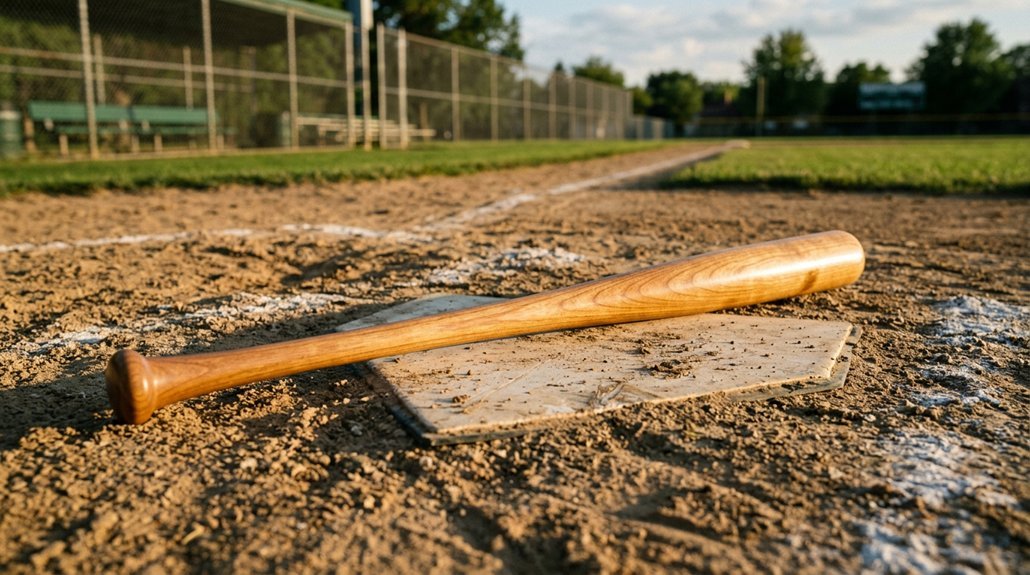
You step into the batter’s box, dirt crunching beneath your cleats, the bat warm in your palms. A good swing isn’t about muscle; it’s about timing, balance, and knowing where your body needs to be.
You’ll need the right stance, a smooth load, and hips that fire like a spring uncoiling. But here’s the catch: most players mess up the basics without realizing it. Stick around, and you’ll fix the hidden flaws stealing your power at the plate.
Stance and Grip: Set Up to Swing Correctly
Why do so many hitters struggle before the pitch even arrives? You’ve probably seen it, standing awkwardly, gripping too tight, losing balance before the swing begins. Your stance sets everything in motion.
Start with your feet shoulder-width apart, maybe slightly wider, knees bent and ready. Plant your back foot firmly, it anchors your entire swing. Keep your weight balanced over the center of your body, not leaning too far forward or back.
Your grip matters more than you think. Use a relaxed grip across your fingers, not buried in your palms, aligning your knuckles straight. Don’t choke the bat, no white knuckles needed here.
Hold the bat near your back shoulder at roughly 45 degrees. Keep your alignment clean, chin pointing toward the mound, and stay focused with your eyes on ball. You’ll own that strike zone before the pitch even leaves the pitcher’s hand.
Recommended Products

IMPROVE BATTING FUNDAMENTALS: Helps players refine their batting stance and stride while training at the batting cages or hitting into a net; Dual-sided to accommodate both left and right-handed batters

【Great Helper for Posture Improvement】Our baseball hitting mat training features clear markings, helping kids learning basic movements develop correct hitting postures. This baseball pitching foot placement mat is an excellent helper for guiding beginners to master fundamental skills.

Load and Step: Time Your Swing to the Pitch
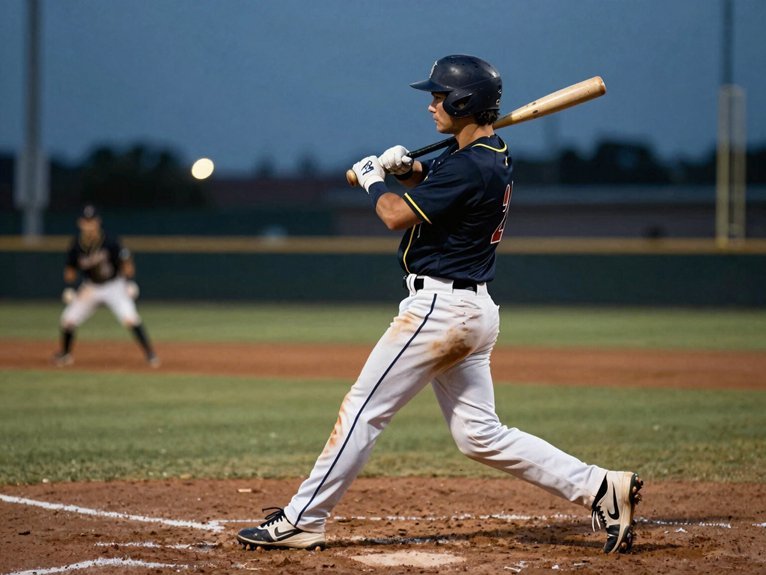
You’ve got your stance locked in and your grip dialed, but now the pitcher’s winding up. It’s time to load and step, the critical moment where timing meets power.
Start your load with a small backward move of your hands while shifting weight onto your back foot. Keep your hands back and your eye on the pitch, resisting any urge to lunge early. This controlled coil stores energy you’ll soon release.
Step with a short, quiet stride, landing your front foot softly as you transfer weight forward. This weight shift creates momentum without throwing off balance. Your stride stays compact, just 2–3 inches, keeping you ready to fire.
Once that front foot plants, your hip rotation initiates the swing. The knob leads toward the pitcher while your barrel stays on plane to the contact point. Get this timing right, and you’re set to drive the ball.
Recommended Products

Used by top pros.

Standard (1. 75 mm) superior gripping power; consistent with Stock grips on most alloy and composite bats

Sport Type: Baseball
Rotate and Drive: Power Through the Ball
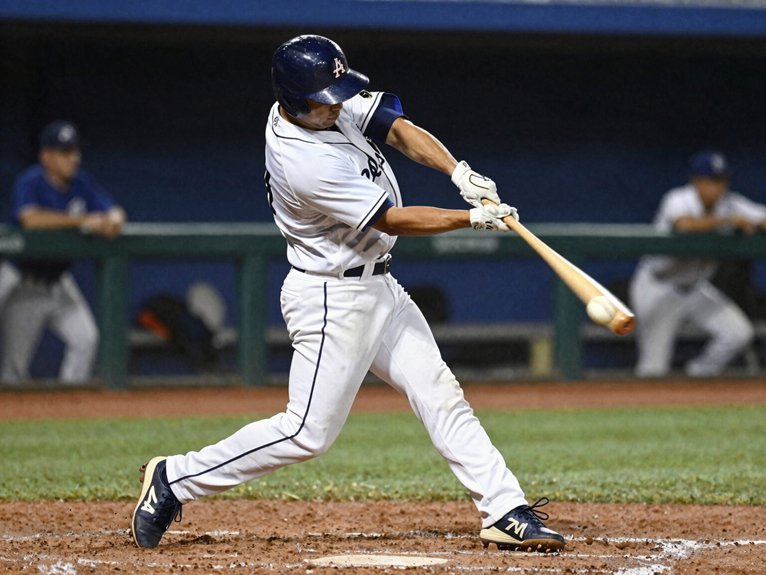
Unleash stored power by firing your hips first, not your arms—this kinetic chain separates average hitters from dangerous ones.
Unleash the power you’ve been storing by firing your hips first, not your arms. This hip rotation creates the kinetic chain that separates average hitters from dangerous ones. You’ve already completed your front foot load, so now explode with back leg drive, pushing through the ball like you’re crushing a soda can under your back foot.
Your weight transfer shifts from that loaded back foot (60% of your weight) through to your front leg at the contact point. This transfer maximizes bat speed without you swinging harder, just smarter. Keep your hands close to your body during this sequence, letting your shoulder rotation deliver the barrel through the zone last.
Maintain a level barrel path through the hitting zone, eyes locked on the ball. Finish with a complete follow-through, chest facing the pitcher, two hands on the bat. These swing mechanics create effortless power.
Recommended Products

SWINGRAIL IS A SCIENCE- BACKED PATENTED WAY TO IMPROVE YOUR SWING MECHANICS & BECOME BETTER HITTER!

Improve timing and confidence

IMPROVE SWING MECHANICS – Whether you're a seasoned player or just starting, the Hurricane Category 4's durable swing arm hitting stick helps you refine your hitting technique, whether static tee practice or moving pitch simulation.
Fix These 5 Swing Mistakes (Before They Stick)
How many times have you stepped out of the batter’s box knowing something felt off, but you couldn’t quite name it? Bad habits creep in fast, and they stick if you don’t catch them early. Here’s what to watch for:
You’re casting the bat outward when you should keep hands inside the ball and move the barrel with the shoulders. Your hips aren’t firing first, so let the hips initiate rotation and keep hands back for real power.
That big leg kick throws off everything. Use a short controlled stride and stay balanced over your center of gravity. Your front shoulder flies open too soon; keep front shoulder level and let the lower body lead.
You’re dropping your head or dipping, so keep your eye on the pitcher through contact with the ball.
Fix these now, or you’ll be fighting timing issues all season.
Recommended Products

【Dual Baseball & Softball Training】This core and hip belt resistance band is a professional dual-purpose training tool for baseball and softball. It works as a softball throwing trainer and arm path trainer, paired with an elastic band for pitching development and baseball hitting resistance strap. It supports daily pitching, swinging and throwing drills, meeting all indoor and on-field baseball training needs.
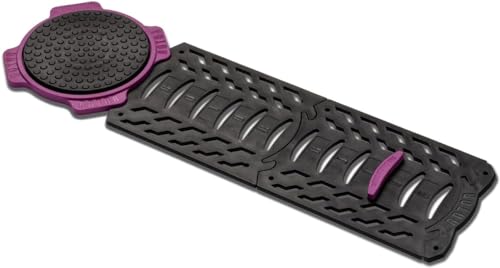
BASEBALL HITTING TRAINING EQUIPMENT: The Rotor Power Batting System is baseball training gear designed to improve the turning technique of budding batsmiths. The rotating plate lets batters learn the proper way to turn into a swing and gain valuable muscle memory for longer distances.

⚾ More Reps, Less Resetting – This baseball swing trainer features elastic bands that return the hitting head to position, allowing your player to focus on their swing rather than resetting the ball after each hit.
Drills That Build Better Timing and Contact
Once you’ve ironed out those mechanical flaws, it’s time to lock in the timing and consistency that turn good swings into hard contact.
Start with tee work to build your foundation. Set the ball at different heights and depths, focusing on your stance and bat path. You’ll groove proper swing mechanics without worrying about pitch speed.
Move to soft toss when you’re ready for a challenge. A partner flips balls from the side, and you react. This sharpens your hand-eye coordination and teaches you to load on time.
Try one-handed swings next. Hit with just your top or bottom hand to isolate control and clean up your bat path. It feels awkward at first, but you’ll gain barrel awareness fast.
Add hip rotation drills with half-swings to feel your lower body drive the action. Power starts from the ground up, not your arms.
Finish with heavy bat swings to build strength and boost bat speed. When you switch back to your regular bat, it’ll feel lightning quick.
Recommended Products

WEIGHTED TRAINING BALLS: Set includes a 6 pack of 16 oz training balls measuring 2.8 inches for baseball and softball training

Instantly shows when hitters make solid contact

Promotes proper grip, hand placement, hip rotation and swing path during and after contact is made. Provides instant feedback, allowing players to make proper adjustments to their hitting technique