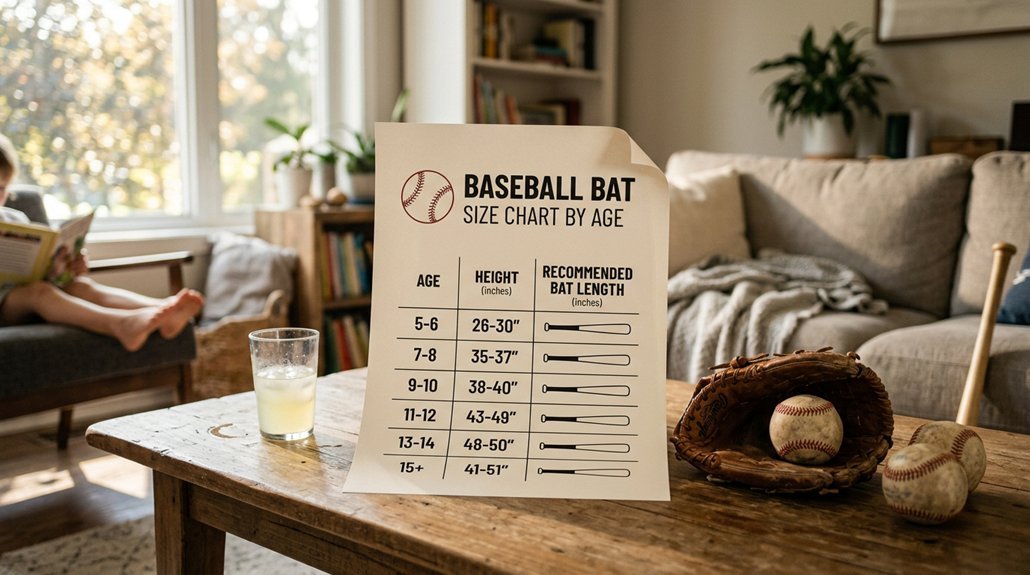
You’re staring down a wall of baseball bats, and every label claims it’s “perfect for your kid.” But here’s the thing: age charts only get you to first base. Your child’s height, weight, and swing speed actually determine whether they’ll crush doubles or whiff at airballs.
You’ll need to navigate USA stamps, USSSA rules, and that mysterious BBCOR switch waiting at high school. The wrong bat wastes money and stalls development. The right one? It builds confidence with every crack of the barrel.
Let’s figure out which charts actually matter, and why one size never fits all.
Tee Ball Bat Size Chart: Ages 4–7 (USA Stamped)
Why does picking the right tee ball bat feel so tricky when your little slugger is just starting out? You’re staring at walls of options, and your kid just wants to swing something already. Here’s where a tee ball bat size chart saves your sanity.
Finding the Sweet Spot
You’ll want a USA-stamped bat measuring 24–26 inches for ages 4–7. Match it to your child’s height and weight, not their age alone. Lightweight barrels build proper mechanics from day one. Heavy bats stall swings and frustrate beginners.
Why This Matters
When you choose using the chart, you’re ensuring safe contact and real confidence at the plate. Your player develops rhythm instead of fighting their equipment. That’s how you turn tee ball from a chore into something they actually want to do again.
Recommended Products

KIDS TEEBALL BAT: The Venom teeball bat is the perfect first metal bat for boys and girls who are just beginning their careers and looking to practice and improve their hitting skills

PREMIUM TEE BALL BAT FOR ENTRY LEVEL PLAYERS: To use with soft-core tee balls and training baseballs

PREMIUM YOUTH T-BALL BALL BAT | Designed for entry-level players AGES 7 & UNDER
Coach Pitch Bat Size Chart: Ages 6–8 (Junior Big Barrel)
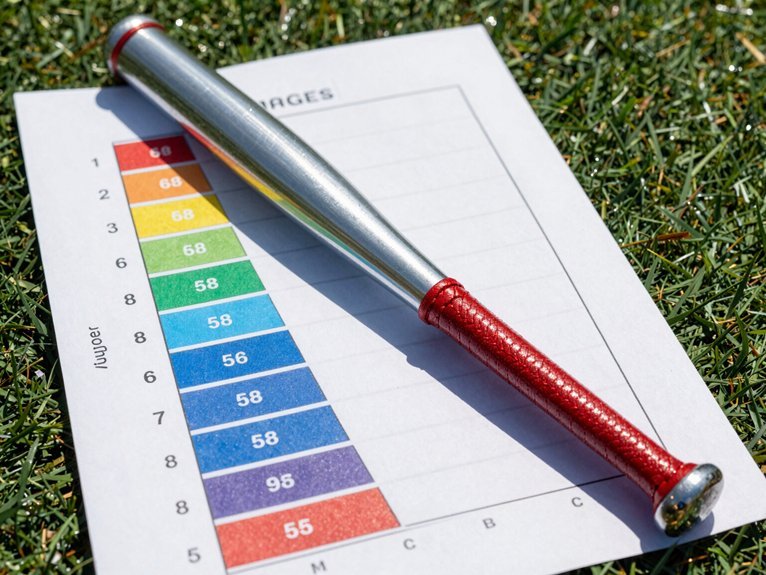
How do you know when your tee ball graduate is ready for the next step? Look for improved hand-eye coordination and the ability to handle slightly heavier equipment. That’s your signal to explore the Junior Big Barrel category.
Finding the Right Fit
You’ll match bat length to your player’s height and weight, not just age. Most 6- to 8-year-olds swing a 25- to 27-inch Junior Big Barrel bat. These bats feature thinner walls and larger barrels, giving young hitters a bigger sweet spot without excessive weight.
Why Junior Big Barrel Matters
This design minimizes painful stinging on mishits, keeping confidence high. You’ll notice better swing control as your child adjusts to coach-pitch speeds.
Quick Selection Tips:
- Lighter bats build proper mechanics
- Test swing weight before buying
- Prioritize comfort over “growing into” it
Interactive sizing tools simplify your search further.
Recommended Products

DESIGNED FOR YOUTH BASEBALL | With a -12 drop weight and 2-1 4’’ barrel diameter this bat is ideal for younger players in USA Certified Baseball Leagues
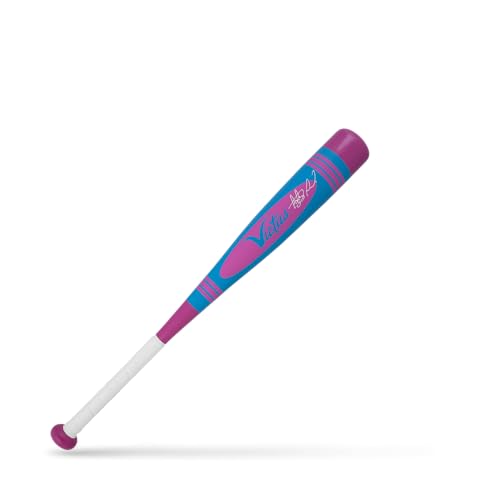
BUILT FOR YOUNG COMPETITORS: Made with one-piece aluminum construction and VXP alloy for lightweight power and long-term durability. The ringless barrel supports easier contact for developing hitters.

DESIGNED FOR ADULTS PLAYING COMPETITIVE/RECREATIONAL SLOWPITCH SOFTBALL
Youth Bat Size Chart: Ages 8–14 (USSSA vs. USA)
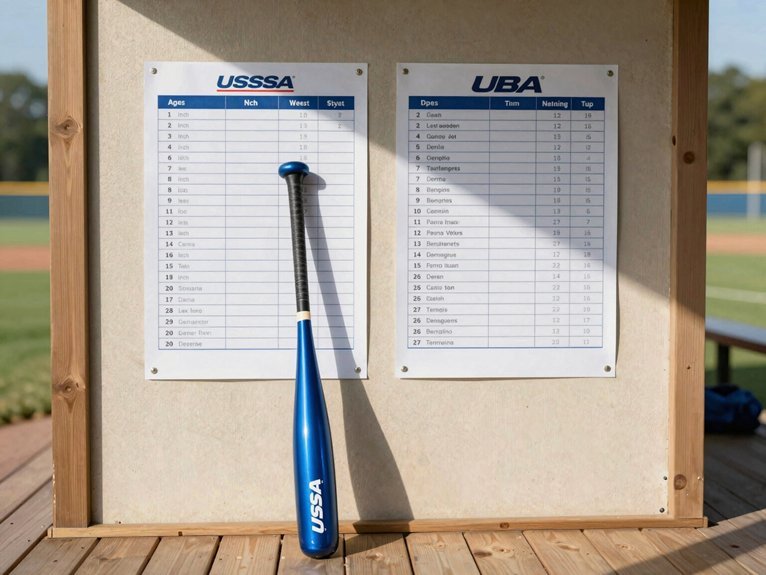
Where do you turn when your player outgrows coach pitch and steps into competitive leagues? You check bat size charts, because USSSA and USA certifications demand different specs for ages 8–14.
USSSA allows lengths from 25” to 33” with drop weights of -5, -8, or -10. These bats pack bigger barrels and hotter performance, so you’ll see them in travel ball.
USA bats run 24” to 32″ with drops from -5 to -13.5. They’re wood-like for safety, mandatory in Little League, and easier to control for developing hitters.
Compare stamps before you buy: USSSA, USA, and others dictate league legality.
Pick by your player’s age, strength, and league rules. Heavier drops build power; lighter drops boost bat speed. Measure against their hip or chest for quick fitting.
BBCOR Bat Size Chart: High School and College
When should your player make the jump to BBCOR? You’ll know it’s time when your athlete hits 14 and enters high school ball, where BBCOR becomes the required standard for competitive play.
What Makes BBCOR Different
BBCOR bats level the playing field with strict specs. You’re looking at a mandatory -3 drop weight, meaning a 33-inch bat weighs exactly 30 ounces. The barrel maxes out at 2-5/8 inches, keeping pop consistent across composite, alloy, and hybrid models.
Lengths typically run 29 to 34 inches, so you’ll match size to your player’s build and swing speed.
Finding the Right Fit
Don’t just grab the longest stick. Test swing speeds with different lengths. A bat that’s too heavy slows your hands; too light sacrifices power. Most high schoolers settle between 31 and 33 inches.
Trust the process, and you’ll find your player’s sweet spot.
Recommended Products

IDEAL FOR AGES 10 AND UNDER | The REMIX USA Youth bat is a premium bat for entry level players learning the fundamentals

DESIGNED FOR YOUTH BASEBALL | With a -12 drop weight and 2-1 4’’ barrel diameter this bat is ideal for younger players in USA Certified Baseball Leagues

Louisville Slugger Youth Genuine Y125 Natural-Black Baseball Bat - 28
When Height and Weight Override the Age Chart
You’ll notice your child’s bat needs don’t always match their birth year, and that’s perfectly normal. When early growth spurts or delayed development throw off standard age charts, you should grab a tape measure and scale instead. Trust the height and weight guidelines to find a bat that actually fits your player’s body, not just their birthday.
Recommended Products

KIDS JUMBO BASEBALL BAT: 24-inch baseball bat is the perfect JUMBO size for boys and girls learning to play baseball!

KIDS TEEBALL BAT: The Venom teeball bat is the perfect first metal bat for boys and girls who are just beginning their careers and looking to practice and improve their hitting skills

KIDS JUMBO BASEBALL BAT: 24-inch baseball bat is the perfect JUMBO size for boys and girls learning to play baseball!
Physical Growth Variations
Kids grow at their own pace, and sometimes that pace throws the age-based bat chart right out the window. You need to recognize these growth variations when shopping for the right bat.
Taller or heavier players require longer bats than their age suggests. Shorter, lighter kids need shorter bats for proper swing mechanics. Your player’s hitting style, bat speed, and strength also influence ideal sizing beyond simple age recommendations.
Don’t guess when growth variations complicate your choice. Use an interactive chart or Bat Coach to determine correct length when height and weight don’t match typical age ranges. These tools account for real-world differences that standard charts miss.
Youth and tee ball resources emphasize age-appropriate sizing, but always adjust when physical development demands it. Trust what you see, not just what the chart says.
Early Growth Spurts
Growth spurts can strike fast, and your player’s bat needs change just as quickly. When your child shoots up or fills out ahead of schedule, age-based charts become unreliable guides.
Trust height and weight measurements instead. These physical markers give you a clearer picture of what bat length actually fits. Interactive online tools and bat coach features can recalibrate recommendations beyond simple age brackets.
During growth spurts, your player might swing a bat several inches shorter or longer than their teammates expect. Regular re-measurement keeps pace with rapid changes. Check sizing charts monthly if needed.
Don’t let an ill-fitting bat slow their progress. Stay proactive, adjust quickly, and you’ll keep their swing comfortable and controlled through every growth phase.
Delayed Development Factors
What happens when your child’s body hasn’t caught up to their age group? Delayed developmental factors mean age charts can mislead you, so don’t follow them blindly.
Prioritize height-for-age and weight-for-age data instead. These numbers guide you toward a bat that actually fits your player’s frame.
Consider their swing mechanics, strength, and bat speed too. A smaller athlete might handle a shorter bat better, even if the chart suggests otherwise.
Use an interactive length chart or Bat Coach tool to adjust recommendations when development lags behind typical milestones. These resources customize suggestions based on real measurements, not just birthdays.
Validate your choice with real-world feedback. Watch your child swing, ensuring the bat provides comfortable weight and control. The right fit builds confidence at the plate.
How to Read Any Bat Size Chart
Why do bat size charts seem tricky at first? You’ll notice numbers everywhere: heights, weights, and bat length measurements in inches. Don’t worry, reading them gets simple once you know the pattern.
Bat size charts look overwhelming with all those numbers, but the pattern becomes clear once you know what to look for.
Start by finding your child’s height and weight on the chart. Where those numbers meet, you’ll spot the recommended bat length. Most charts use this cross-reference system to match body dimensions to proper sizing.
Look for interactive “Bat Coach” tools if you want personalized help beyond basic tables. These features adjust recommendations based on swing style and strength.
You’ll also see separate sections for tee-ball and youth leagues. These dedicated guides narrow choices by age group, so you won’t waste time sorting through irrelevant options.
When in doubt, test a few lengths. Comfort matters as much as the chart suggests.
Recommended Products

DESIGNED WITH THE PERFECT COMBINATION OF POWER AND CONTROL, the Rawlings Remix USA Baseball Tball Bat (-12) provides players with a larger sweet spot on a bat that is easy to swing

PREMIUM T-BALL BALL BAT FOR ENTRY LEVEL PLAYERS to use with soft-core tee balls and training baseballs

YOUTH T-BALL BAT | Designed for players ages 7 and under who are just starting out.
Composite or Alloy: What’s Better for Your Kid?
You’re probably wondering which bat material will help your kid succeed at the plate, so let’s break down how composite and alloy options stack up. You’ll notice real differences in performance, from the powerful pop and larger sweet spot of composite bats to the durability and balanced feel of metal alloys.
Choosing the right material comes down to your child’s age, strength, and playing conditions, and we’ll help you match them perfectly.
Recommended Products
BUILT FOR YOUNG COMPETITORS: Made with one-piece aluminum construction and VXP alloy for lightweight power and long-term durability. The ringless barrel supports easier contact for developing hitters.

IMPRESSIVE SWEET SPOT | The 2 1/4" barrel delivers a massive sweet spot, making it easy for young players to improve plate coverage and the confiednece to make consistent, powerful contact

EASY-TO-HANDLE | This lightweight and easy-to-handle bat is great for helping young hitters square up more pitches and swing with confidence.
Material Composition Differences
The material your kid’s bat is made from changes everything about how it performs at the plate. You’ll notice the difference immediately when you compare bat material options side by side.
Composite bats layer carbon fiber or graphite for explosive pop and a generous sweet spot, but you’ll need 150 to 200 hits to break them in properly. Don’t use them below 65 degrees, or you’ll risk cracking the barrel.
Alloy bats come ready to rip with no break-in needed. They’re tough, balanced, and budget-friendly, though younger players might find them slightly heavier with less forgiveness on mishits.
Hybrid designs give you the best of both worlds: a composite handle cuts sting while an alloy barrel delivers instant performance. No break-in, no waiting, just results.
Consider your climate, your player’s strength, and how much patience you’ve got for prep work.
Performance Characteristics Compared
When you choose between composite and alloy, you’re really deciding what kind of player experience you want to deliver.
Composite Bats
You’ll get explosive pop and a generous sweet spot that forgives off-center contact. But you’ll need patience: these bats demand 150–200 hits to break in properly. Don’t use them in cold weather below 65 degrees, or you’ll risk cracking the barrel.
Alloy Bats
You can swing these right out of the wrapper with zero break-in time. They’re tough, versatile, and budget-friendly, though younger players might find them slightly heavier.
Hybrid Options
You get the best of both worlds: composite handles reduce sting, while alloy barrels deliver durability and immediate playability.
Quick Privacy Note: Your purchase history stays private, so shop without worry.
Choose composite for maximum performance after break-in, alloy for instant action, or hybrid for balanced benefits.
Age Appropriate Selection
How do you know which bat material matches your child’s age and skill level? You’ll want to weigh performance against practicality when choosing between composite, alloy, and hybrid options.
Composite Bats: Power with Patience****
Composite bats deliver explosive pop and a forgiving sweet spot, but they need 150–200 hits to break in properly. They’re not your friend in cold weather below 65 degrees, so skip these if your player hits year-round in chilly climates.
Alloy Bats: Ready Right Now****
Alloy bats offer durability and balanced feel with zero break-in time. Younger players might find them slightly heavier, and the sweet spot runs smaller than composite alternatives.
Hybrid Bats: The Middle Ground
Hybrids pair a composite handle with an alloy barrel, cutting vibration while delivering instant performance.
Match bat size and material to your child’s swing speed, strength, and feel preferences for best results.