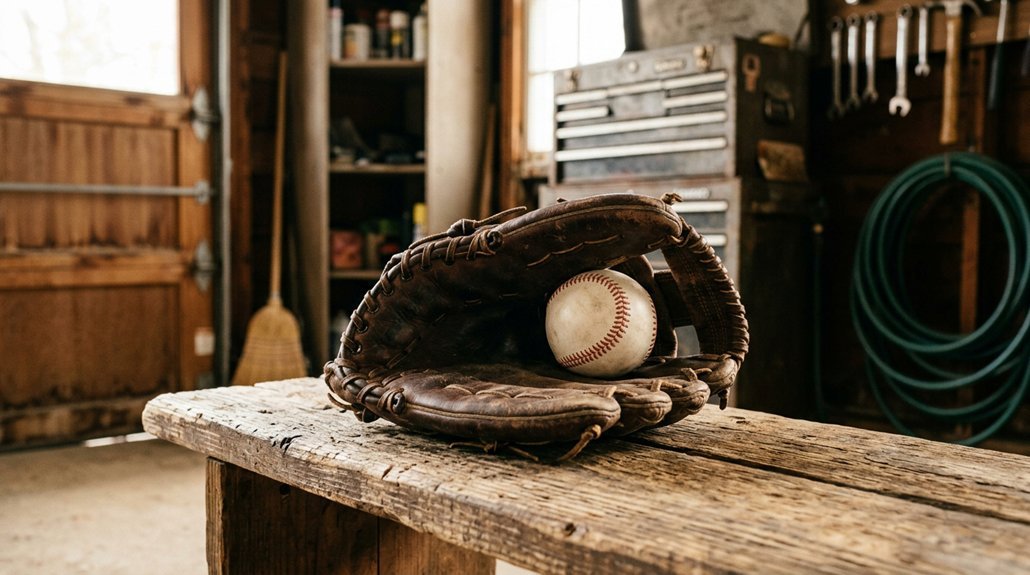
You just finished your last game of the season, and now your glove sits there waiting, almost like it knows what’s coming next. Don’t toss it in the garage and forget it. You’ve got to store it right, or that perfect pocket you worked so hard to break in will flatten out like a pancake.
The good news? It only takes a few minutes to protect your investment. Here’s how to keep your glove game-ready for next spring.
Clean and Dry Your Glove Before Storing
Where should you start when putting your glove away for the season? You begin with proper glove care, and that means you clean and dry your glove thoroughly.
Grab a soft brush or damp cloth and wipe away all debris and moisture. You want the surface clean, not soaked. Then let your glove air dry at room temperature. Don’t place it in direct sun or near artificial heat, or you’ll risk cracking the leather.
Once it’s dry, apply a small amount of conditioner or oil evenly across the leather. Let it absorb for 24 hours. This keeps the material supple and ready for next season.
These storage best practices protect your investment. You store your glove in a warm, dry place away from vents, radiators, and sunlight. Your glove stays game-ready when you treat it right.
Recommended Products

Protective Hard Shell Design: Keep your glove safe and maintain its proper position to help shape and preserve your expensive leather from the elements

Soft breathable pure cotton fabric, dust-proof and washable;

Stretchable and washable neoprene
Keep the Pocket Deep With a Ball or Wrap
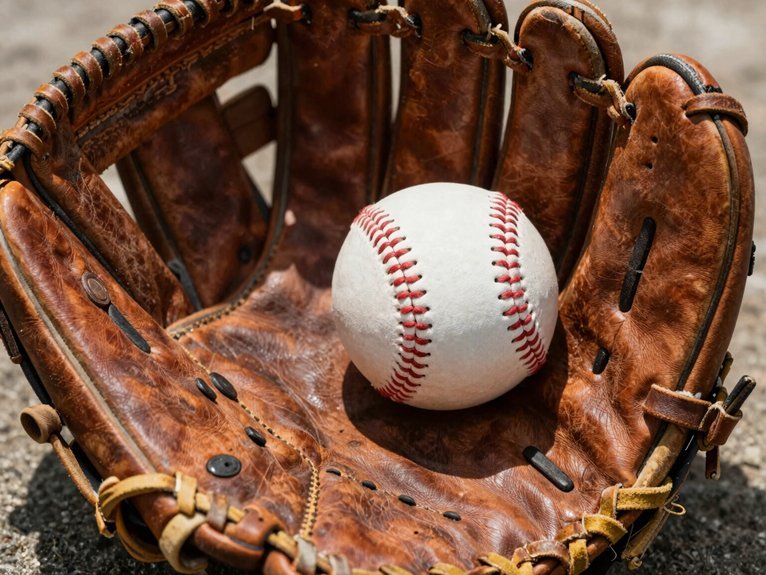
You’ll want to keep your glove’s pocket deep and game-ready by placing a ball inside before storing it for any length of time. This simple trick prevents flattening, preserves that perfect catching shape, and saves you from reworking the leather later. You can also use a specialized wrap or band to hold the ball snugly in place, giving you extra control over pocket formation and long-term shape retention.
Recommended Products

COMPLETE LEATHER CARE: Our baseball glove oil conditioner is designed for all leather gloves, including baseball, softball, and football mitts, ensuring they remain in top condition.

✨Revive & Protect Your Leather: The Aosdc Mink Oil Kit Is Designed To Thoroughly Cleanse, Moisturize, Shield, And Rejuvenate Your Prized Leather Possessions While Defending Against Daily Damage. As A Professional Mink Oil For Leather Boots And Versatile Mink Oil For Leather, It Is Perfect For Cowboy Boots, Hiking Boots, Sleek Loafers, Motorcycle Jackets, And An Array Of Leather Accessories Like Briefcases, Gloves, Sofas, Car Interiors, Watch Straps.

FASTER BREAK-IN – Use glove oil to break in gloves so a new or stiff mitt softens evenly and shapes to your hand. The lanolin-based formula absorbs fast to help form the pocket and hinge points, making closes smoother on a catcher’s mitt, without gumming laces or leaving a slick, greasy feel.
Pocket Shape Preservation
Why let your glove lose its edge when a simple trick keeps it game-ready? You need to protect your glove pocket if you want that satisfying “pop” on every catch. Pocket depth matters more than you think, and proper storage shape determines how quickly your glove bounces back into action.
Here’s how you do it:
- Stuff that pocket with a ball when storing long-term to maintain depth and prevent flattening.
- Lay it flat on the palm or keep fingers up to preserve overall structure.
- Avoid the cram by never squashing your glove flat on its side without support.
- Check regularly because a flat, empty pocket shrinks and kills performance later.
A deeper pocket catches easier and holds that game-ready contour. Treat your glove right, and it’ll treat you right back.
Ball Placement Technique
You already know a flat pocket kills your glove’s game, so let’s lock in that depth with the right ball placement.
Why Ball Placement Matters
A collapsed glove pocket won’t cradle fly balls or snag grounders when you’re back on the field. Without support, leather settles flat and loses its shape. This storage technique keeps your pocket game-ready.
How to Position the Ball
Insert the ball in pocket with the glove flat, palm up, or fingers pointing skyward. This supports the structure and maintains that essential depth for quick ball concealment.
Stay Proactive
Check periodically that your ball hasn’t shifted. A wandering ball can deform the pocket over time, undoing your careful prep.
With consistent ball placement, you’ll preserve shape and performance. Your glove stays broken-in, not broken-down.
Wrap Accessory Benefits
What’s the best way to keep your glove’s pocket deep when you’re not using it? You already know about placing a ball in the pocket, but a wrap accessory takes your pocket maintenance to the next level. A wrap accessory secures the ball firmly inside your glove pocket, preventing unwanted shifting. You’ll protect your investment and ensure consistent shape retention.
Here’s why you’ll love using one:
- Secure hold, keeps the ball locked in place, so your glove pocket maintains perfect depth
- Travel protection, shields against crushing during transport to games and practice
- Shape preservation, prevents flattening that ruins catching performance
- Convenience, slips on quickly and works with most glove sizes
Combine your wrap accessory with proper storage, and you’ll step onto the field ready to snag every grounder. Your glove stays game-ready, season after season.
Choose the Right Indoor Storage Location
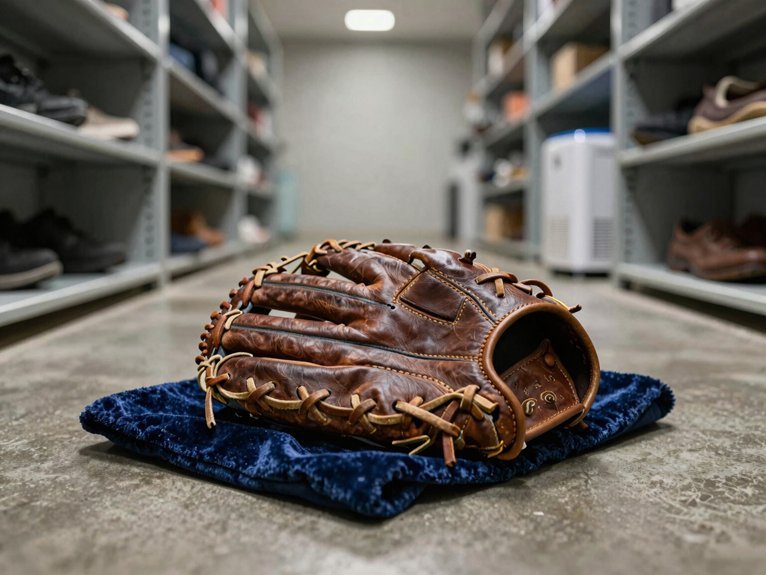
A baseball glove is like a trusty teammate. It needs a good home when the season ends.
Your glove storage starts with picking the right spot inside your home. Find a shelf in a room with controlled temperature, away from garages, sheds, or cramped spaces under beds. These places trap moisture or swing between hot and cold, which damages leather. You want steady conditions and decent airflow so your glove breathes.
Keep it flat on the palm or with fingers pointing up to hold that pocket shape you’ve worked hard to form. Don’t cram it into a packed equipment bag or stack multiple gloves in a crate. Give each glove its own space.
Treat your glove right—flat palm, fingers up, own space, no cramming.
Skip spots near vents, radiators, or sunny windows. Too much heat dries leather fast and causes cracking.
Recommended Products

Perfect Pressure Application: Achieve the ideal glove feel with our highly stretchable material, allowing you to apply the perfect pressure to your glove. Tailor the fit to your liking for a personalized and comfortable playing experience.

Wrap your glove to maintain the pocket and keep the glove shape all year-around.

Perfect Pressure Application: Achieve the ideal glove feel with our highly stretchable material, allowing you to apply the perfect pressure to your glove. Tailor the fit to your liking for a personalized and comfortable playing experience.
Adjust Your Glove Storage for Season vs. Offseason
Where should your glove live when you’re playing ball versus when you’re hanging up your cleats? Your glove storage strategy shifts dramatically between season and offseason.
In-season, you’re grabbing your glove daily, so accessibility matters most. During the offseason, you’ll want intentional placement that preserves shape and leather quality.
Follow these offseason storage essentials:
- Pick a shelf in a climate-controlled room, not garages or sheds
- Store flat on the palm or fingers-up with a ball in the pocket
- Ensure proper airflow by avoiding crowded closets or under-bed cramping
- Use glove wraps or hard-shell cases to prevent deformation
You’ll protect your investment and extend your glove’s life by adjusting your approach. Smart offseason care means your glove’s ready when opening day rolls around.
Recommended Products

Dual-Use Gloves Holder Flexibility - Easily mount our acrylic glove holder on the wall with the included hardware or place it on a countertop with included clear bumpers for stability. A must-have for any workspace.
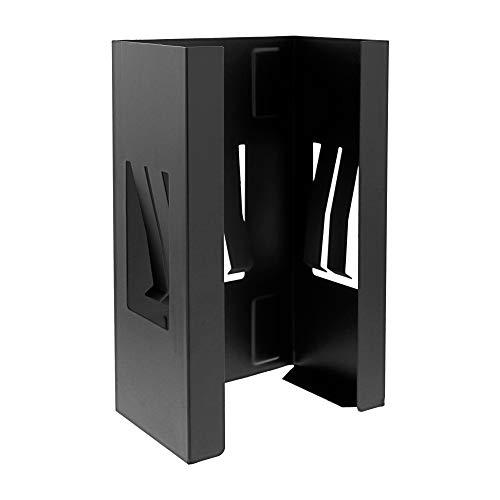
Universal Dispensing Unit: Efficiently dispense gloves, wipes, and tissues with this versatile wall mount, accommodating various box sizes thanks to self-adjusting springs.

PREMIUM MATERIAL & SAFE DESIGN:glove dryer rack is made of durable ABS plastic, ensuring long-lasting use without odor; lightweight design keeps your kitchen glove holder safe and easy to clean
Protect Your Glove During Transport and Travel
Your glove’s safe at home, but the real test comes when you’re heading to the field or hitting the road for a tournament. Don’t let glove transport wreck your leather investment.
Start with proper storage basics. Keep your glove flat on its palm or with the pocket slightly curved, palm-up or fingers-up. This maintains form during bumpy rides.
Avoid cramming it into fully packed bags or stuffing it under beds with other gear. Consider protective accessories for serious travel. A glove wrap or hard-shell glove guardian shields against crushing when bags get tossed around. You’ll thank yourself when you arrive game-ready.
For longer trips, store a ball in the pocket to maintain depth. Keep everything in a warm, dry spot away from direct heat and sunlight. Your glove stays game-ready, trip after trip.
Recommended Products
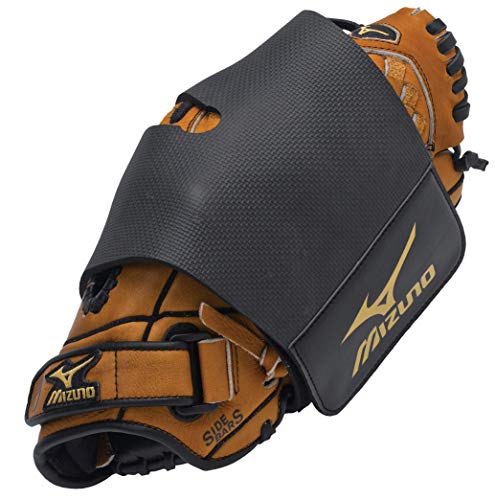
Flex cut panel allows for the perfect fit on any sized glove

Stitch-free fingertips for enhanced precision

Superior Material: Crafted from durable polyester material, these 4pcs baseball glove wrap bands are lightweight yet robust, ensuring long-lasting performance. Each band weighs 81g and measures approximately 35cm × 10cm (13.78 × 3.94 inches), providing a snug fit for most standard baseball and softball gloves.
Oil Your Glove Before You Put It Away for Winter
Why let months of cold weather ruin the leather you’ve worked so hard to break in? You need to oil your glove before storage season hits. A little conditioner goes a long way toward keeping that pocket game-ready.
Here’s your winter prep checklist:
- Apply a small amount of oil or conditioner to moisturize the leather and prevent cracking
- Use a clean cloth to spread it evenly, avoiding oversaturation that warps the shape
- Let the oil penetrate for 24 hours at room temperature before you store it
- Wipe away excess and confirm the glove feels dry and pliable
Once conditioned, store your glove flat with the palm up or pocket supported. Consider placing a ball in the pocket to maintain that perfect depth all winter long. Your glove will thank you come spring.
Recommended Products

Baseball Glove Holder: Accommodate up to an adult baseball glove & a kids baseball glove, and safeguards your caps from impacts, scratches, and dust, ensuring they stay in pristine condition. Baseball glove bag making it ideal for travel, storage, or everyday use

✅ Premium Microfiber Fabric: Scratch-Proof & Long-Lasting Protection Crafted from high-density microfiber, our storage bags are ultra-soft to the touch—gentle enough for delicate surfaces like sunglasses lenses, camera optics, and leather handbags, while effectively preventing scratches, dust, and minor scuffs. The fabric boasts strong water absorption and quick-drying performance, and it’s fully machine washable (cold water, gentle cycle) without shrinking or losing shape. Unlike flimsy non-woven bags that tear easily, our microfiber material maintains durability even after 50+ washes, making it a reusable storage solution for years.

Universal Baseball Glove Bag: Perfectly fits any baseball or softball glove, featuring an internal compartment specifically designed to store baseballs as well. Keep your essential gear organized and protected
Match Storage to Your Glove’s Leather Type
You’ll want to store your cowhide glove with extra care since its softer leather breaks in fast but can lose shape if squished or overheated.
Your steerhide glove’s tougher build means it forgives minor storage mishaps, though you’ll still benefit from keeping it cool and properly shaped.
Match your storage approach to what you’ve got, and your glove will thank you come spring.
Recommended Products
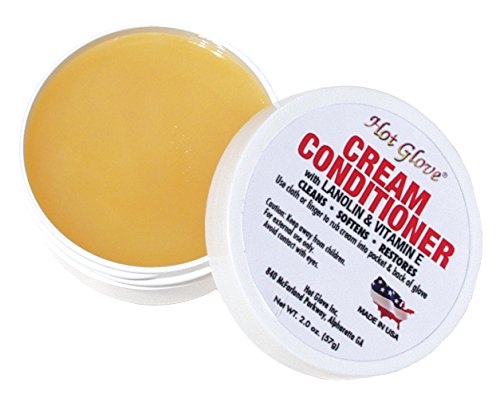
Safeguard Your Glove with Hot Glove Cream Conditioner: Discover the ultimate defense for your glove with Hot Glove Cream Conditioner – a safe, easy, and highly effective solution to protect and preserve your prized gear.

PREMIUM FORMULA: Contains highest quality active ingredients
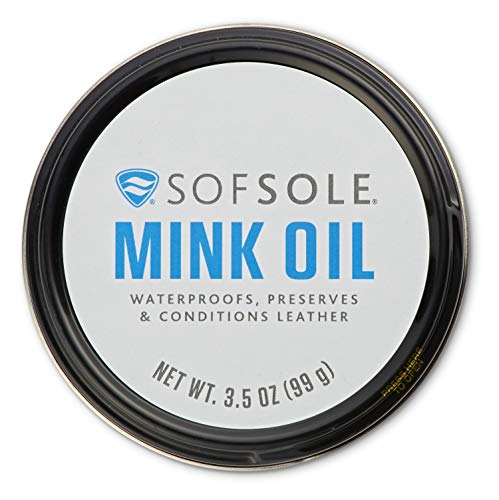
Mink oil for Waterproofing, conditioning, and preserving leather goods
Cowhide Storage Needs
Where should you store a cowhide glove when the season wraps up? You need a spot that protects its softer, faster-breaking-in nature without letting it fall apart. Cowhide storage demands attention to condition because this leather type won’t forgive neglect like tougher hides might.
Here’s how you do it:
- Find a climate-controlled zone. Keep your glove away from vents, radiators, and windows where heat and humidity fluctuate.
- Position it properly. Store flat on the palm or fingers-up to preserve that pocket shape you’ve worked hard to form.
- Maintain the pocket. Tuck a ball inside or use a glove wrap so cowhide’s tendency to compress doesn’t flatten your web.
- Condition lightly. Apply minimal oil before storing; too much softens the leather and messes with your grip.
Steerhide Durability Care
How does steerhide change your storage game? You’ve picked a tougher, more durable leather that’ll outlast cowhide, but it demands respect during storage.
Break-In and Conditioning
Your steerhide glove needs a longer break-in period, so consider pre-oiled options to speed things along. When conditioning, don’t go overboard. Moderate oiling preserves that prized stiffness; too much shortens lifespan and ruins the feel you bought it for.
Smart Storage Setup
Store your steerhide in a warm, dry spot away from sunlight. This prevents drying cracks and maintains the leather’s structure. Use a ball fixture or shape keeper to protect that deep pocket steerhide gloves are famous for.
Treat your steerhide right, and it’ll treat you to seasons of reliable performance.
Stop Storing Gloves Under Beds and in Car Trunks
Why let your glove become a casualty of convenience? You’re better than shoving your prized leather under the bed or tossing it in the trunk. These shortcuts wreck your investment.
Under the bed, your glove suffocates. Without air circulation, moisture creeps in and warps the shape you’ve worked hard to break in. You won’t spot problems until it’s too late.
Your glove suffocates under the bed—trapped moisture warps its shape while you sleep.
Car trunks are torture chambers. Sweltering summers roast the leather dry, while freezing winters make it brittle and prone to cracking. Your glove deserves better.
Upgrade your glove storage game with these moves:
- Choose a shelf or closet with steady temperatures for your controlled environment
- Keep fingers pointing up or rest the glove flat on its palm
- Slip a ball into the pocket to maintain that perfect depth
- Leave breathing room, never cram gloves into crowded spaces
Fix a Glove You Stored Wrong
Your glove took a beating from bad storage, but you can still turn this around. Start your glove care routine by removing any moisture. Wipe the leather clean and let it air dry at room temperature, keeping it away from direct heat sources like radiators or vents.
Once dry, condition with a small amount of oil or cream. Work it in evenly and let it absorb for 24 hours. Reshape the pocket by placing a ball inside and wrapping the glove with a band overnight. This restores that game-ready form you need.
Check those laces too. Replace anything loose or degraded, then mold the glove back through regular use.
Finally, fix your storage conditions. Keep your glove in a warm, dry, ventilated spot away from sunlight and crowded gear piles.
Recommended Products

Space Saving: our acrylic glove box holder can hold 2 boxes of disposable glove boxes, easy to pull out and put in, and is wall mounted design, which can save a lot of space and keep your room tidy and clean

❄️ EXTREME TEMPERATURE RESISTANCE: Engineered to withstand the harshest cold environments, Egowz cryogenic gloves provide exceptional thermal protection, keeping your hands warm in ultra-low temperatures down to -196°C/-320°F. With a broad and safe operating range from -196°C/-320°F up to +148°C/298°F, they ensure maximum safety and flexibility in extreme freezing conditions.
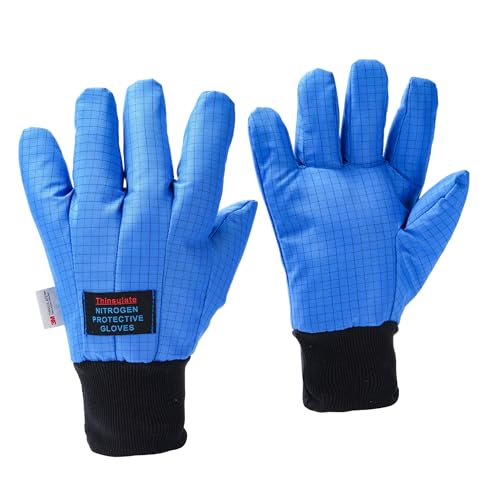
❄️ EXTREME TEMPERATURE RESISTANCE: Engineered to withstand the harshest cold environments, Egowz cryogenic gloves provide exceptional thermal protection, keeping your hands warm in ultra-low temperatures down to -196°C/-320°F. With a broad and safe operating range from -196°C/-320°F up to +148°C/298°F, they ensure maximum safety and flexibility in extreme freezing conditions.
Check and Tighten Laces Before Long-Term Storage
Before you tuck your glove away for the off-season, you’ll want to give those laces some attention since they’re what hold your pocket together. Inspect each lace for fraying or weak spots, then tighten any loose knots so the leather keeps its shape while it sits.
If you spot worn or broken laces, swap them out now at a sporting goods store, because uneven tension can warp your glove over time and leave you with a lopsided pocket come spring.
Recommended Products

Inspired Design: designed with a Christian cross graphic and Bible verse, the baseball and softball glove wraps will lift your spirits, improve your mood, help you excel and feel empowered in every game
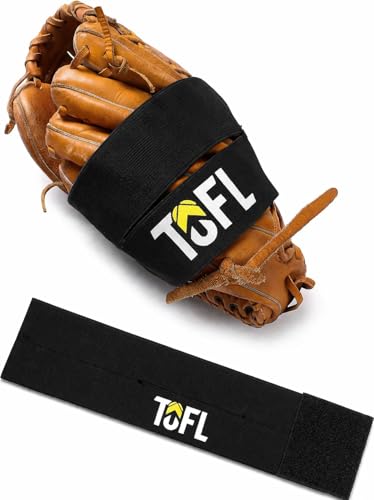
VIBRANT BASEBALL & SOFTBALL GLOVE WRAP: Elevate your game with TOFL glove wraps available in black, blue, pink, and red. Match your style while keeping your mitt shaped and ready for every play.
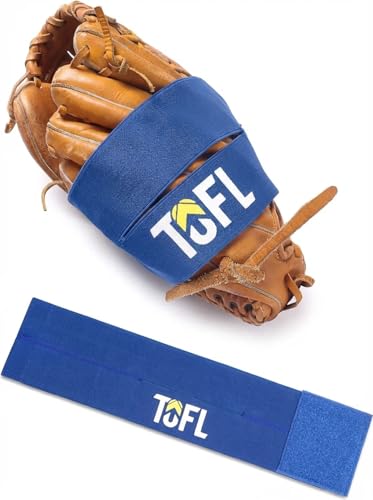
Vibrant Baseball & Softball Glove Wrap: Elevate your game with TOFL glove wraps available in black, blue, pink, and red. Match your style while keeping your mitt shaped and ready for every play.
Inspect Lace Condition
How often do you give your glove’s laces a proper once-over? Before storage, you’ll want to conduct a thorough inspection of every lace on your glove. Damaged laces can ruin your glove’s shape while it sits unused, so catching problems now saves you headaches later.
Here’s what to check during your inspection:
- Scan all laces for fraying, cracks, or wear that could worsen in storage
- Examine the laces between fingers and along the palm where stress concentrates
- Look for broken knots or weak points that might give way
- Note any damage needing replacement before you store the glove
If you spot serious wear, replace those laces at a sporting goods store or Glove Care Center. Document what you find so you’ll know what to watch next season.
Tighten Loose Knots
While you’ve already inspected your laces for damage, it’s equally important to check their tightness before putting your glove away for the season.
Grab your glove and work through each section, paying special attention to the web and between the fingers where laces tend to loosen first. A lace tightening tool makes this glove maintenance step much easier, though your fingers work fine in a pinch.
Loose laces let the pocket collapse, so you’re basically undoing all that break-in work. Tighten any knots that’ve slipped, and check that the glove still sits flat on its palm with the pocket open. This proper storage orientation keeps the shape intact.
Note any stubborn wear spots now. Small fixes today prevent bigger headaches when you’re ready to play ball again.
Replace Worn Laces
Where exactly should you look when your glove’s laces start showing their age? Check between the fingers and along the finger stalls, where friction and tension do the most damage. You can’t skip this step if you want solid glove maintenance before storage.
Here’s your quick inspection plan:
- Scan all laces for fraying or broken strands after every game
- Tighten loose sections immediately to preserve pocket shape
- Match replacement laces to your glove’s original eyelet pattern
- Reshape the pocket with a ball inside before storing
Don’t put off lace repairs. Worn laces loosen during storage care, warping your glove’s form and hurting performance later. Fix them now, and you’ll keep that pocket game-ready for next season.