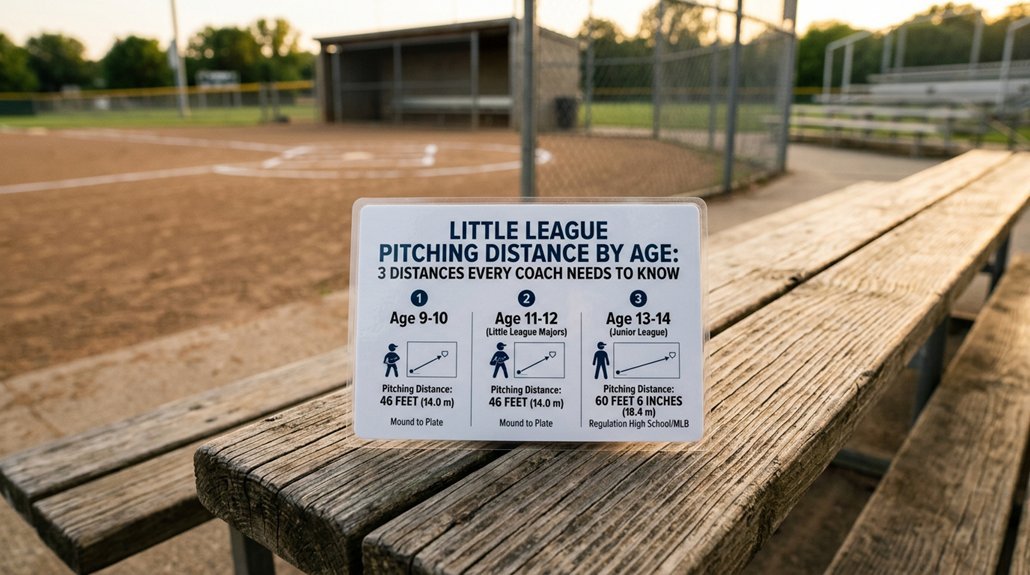
You’re setting up the mound for your first practice, and you realize the pitching distance looks off. Get this wrong, and your young pitchers develop bad mechanics or worse, arm injuries. Little League actually uses three standard distances: 46 feet for ages 9–12, 50 feet for Intermediate play, and 60 feet 6 inches for Juniors and Seniors. Each step up prepares kids for the next level without overwhelming their developing arms.
Measuring correctly matters just as much as the distance itself. You’ll need to start from the back of home plate, not the middle, and run your tape straight to the front edge of the rubber. Many coaches eyeball it and end up off by several inches. That small error changes pitch perception for hitters and strains young shoulders.
Proper mound setup includes more than distance. The rubber must sit exactly 10 inches above home plate level with a gradual slope falling away toward first and third base. Maintenance keeps everything consistent through weather and heavy use. Cover your mound with a tarp between practices, and check measurements monthly. A well-kept mound prevents twisted ankles and builds confidence in your pitchers.
Now, which distance applies to your team, and how do you verify you’re measuring it the right way?
Little League Pitching Distance by Age Division
Whether you’re coaching your first season or you’ve been around the diamond for years, you’ll need to know exactly how far your pitcher stands from home plate.
Little League organizes its age divisions with specific pitching distances that match developing arms. The Major Division, covering ages 9 through 12, sets its pitching distance at 46 feet. This shorter length lets younger players build accuracy and confidence without overextending.
You’ll notice a step up at the Intermediate (50/70) level, where the pitching distance stretches to 50 feet. This prepares athletes for the full-sized diamond ahead.
Junior League and Senior League divisions both use 60 feet 6 inches, matching regulation standards. Junior League offers a local option to shorten to 54 feet if needed, but most programs stick with the full distance to keep players competitive.
Recommended Products

【IDEAL USED IN】: Adult youth baseball for League Play, Practice, Games, Competitions, Keepsakes, Arts and Crafts, Gifts, Trophies, Autographs souvenirst, use it in any...
How to Measure Pitching Distance: Back of Plate to Front of Rubber
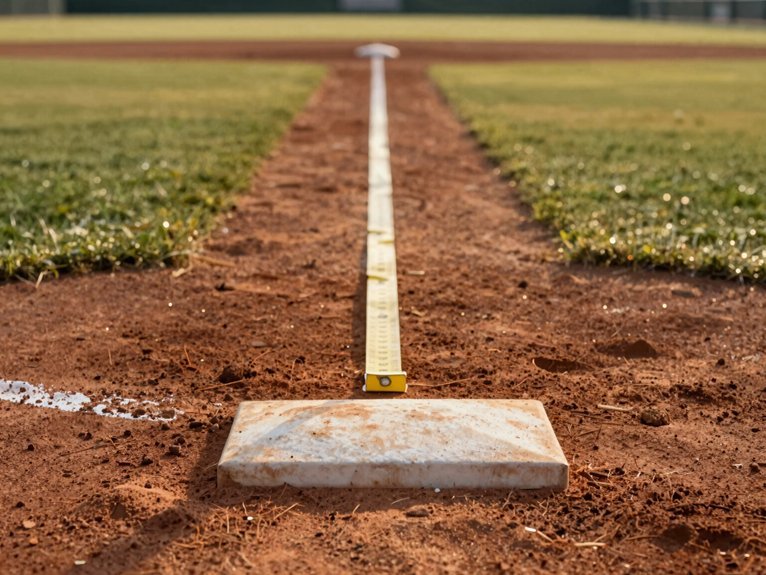
How exactly do you know your mound is set up right? You’ll measure from the back of plate to the front edge of the pitching rubber, not the center. That’s the Little League standard.
Grab your tape measure and find the apex of home plate, the pointed corner facing the mound. Stretch it straight to the front edge of the pitching rubber. For Major Division, you’re looking for 46 feet exactly. This measurement matters because every inch affects your pitcher’s throw.
The pitching rubber sits 18 inches long on the mound, so you’ll align its front edge carefully. Keep the back of plate as your fixed starting point, and double-check that both corners of home plate square up with the rubber. Get this distance from plate right, and you’ve built a proper foundation for fair play.
Recommended Products

Standard Size: This softball pitching mat measures 10x3 feet, coming with a inlaid pitching rubber and stride lines for enhanced pitching power that can assist you in improving accuracy

DURABLE: Heavy-duty UV-resistant rubber construction endures the elements and spiked shoes.

PERFECT FOR KIDS: Ideal for younger players learning how to pitch, the Champion Sports Youth League Pitchers Plate provides each pitcher just the right foundation and tactile feel to sharpen skills
Pitching Mound Setup: Height, Slope, and Rubber Dimensions
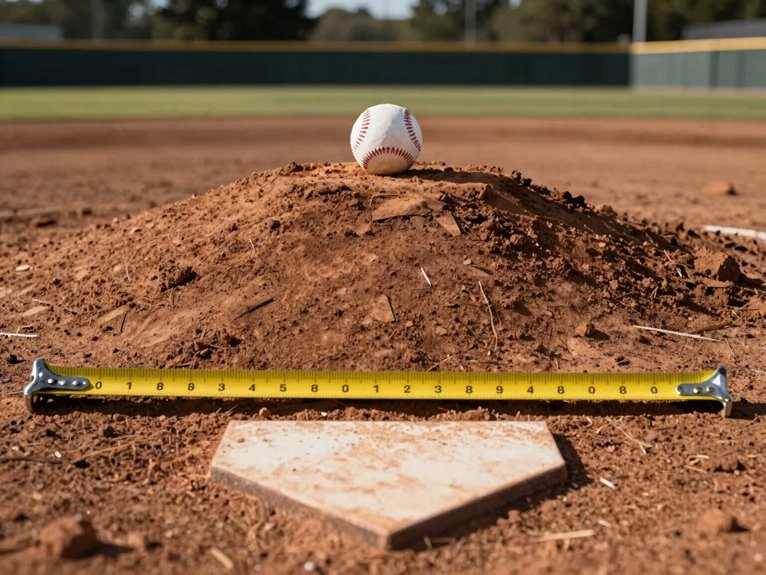
Once you’ve locked in that 46-foot measurement, it’s time to build the mound itself. Your pitching mound for Little League Major Division needs a 10-foot diameter circle with a plateau 5 feet wide by 3 feet deep centered on top.
Place your pitching rubber, 18 inches long by 4 inches wide, so its front edge sits exactly 46 feet from home plate. The mound height depends on your age group: 6 inches for 10 and under, 8 inches for 11–13. The slope drops 1 inch per foot from the plateau toward home plate, starting 6 inches in front of the rubber.
Don’t skip mound maintenance. Tamp the landing area and plateau after each use, and cover with a tarp overnight. Your pitchers will thank you with better control and fewer twisted ankles.
Recommended Products

【UV PROTECTION TARP+WEATHER PROOF】The round tarp is closely woven from high-density polyethylene material, 100% waterproof, with UV material added, making it sturdy and durable. It is effective against strong sunlight, heavy rain, high winds and snow, thus providing reliable protection for outdoor activities

Made of Polyethylene, 12 Mil, 6 oz per Sq. Yd.

Made of Polyethylene, 12 Mil, 6 oz per Sq. Yd.