Your teammate just added five miles per hour to his fastball after six weeks of band work. You want that same edge, but you’re not sure where to start.
These five resistance band exercises target the exact muscles that power your throw, and they’re simpler than you think. Let’s break down how each one builds velocity from the ground up.
Band Exercises for Pitchers: Activate Your Subscapularis at 0
Why do so many pitchers overlook the subscapularis? This hidden rotator cuff muscle drives internal rotation and keeps your shoulder stable when it matters most.
Wake Up Your Subscapularis with IR @ 0****
You’ll use a resistance band for activation, not heavy strength work. Pin your elbow tight to your side, add a towel if you want better scapular plane alignment, and squeeze to fire those internal rotators.
This zero-degree position builds the foundation for shoulder stability by depressing your humeral head and creating smooth ball-and-socket movement. Better scapular control means cleaner elbow/shoulder alignment through your delivery. That translates to safer arms and improved pitching velocity.
Master IR @ 0 first, then progress to 90-degree variations. Your rotator cuff will thank you, and your fastball might find another gear.
Recommended Products

THE FIGURE OF 8 PROVIDES EFFECTIVE STRENGTH TRAINING : arms, back, shoulders, legs and hips are exercised at once with an active band, ideal for body stretching, resistance training, yoga and physical therapy, helping to strengthen torn ligaments or muscles

【Premium Quality】 3 Exercise Bands with Color-coded Resistance Levels (Light, Medium, X-Heavy), Made from Upgraded Rubber Material, Not Sticky Material, Eco-Friendly, Non-Toxic, Latex-Free, People with Latex Allergie can also Use It Safely.

Band Exercises for Pitchers: Stabilize Your Posterior Cuff at 0
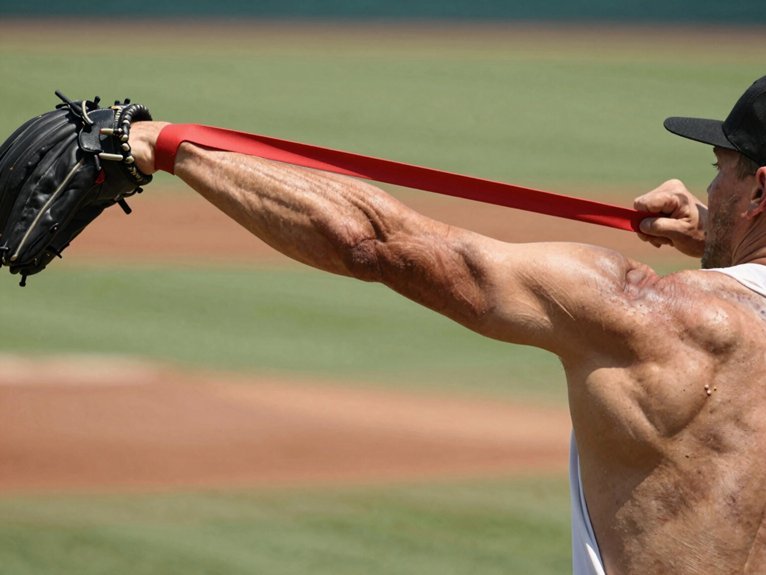
You’ve probably hammered your internal rotators enough by now, so it’s time to give your posterior cuff some love. Stabilizing your posterior cuff at 0 degrees balances all that internal rotation work with the control you need for safer pitching mechanics.
Your posterior cuff has been waiting for this—time to balance all that internal rotation work with the stability your shoulder actually needs.
Why This Matters
Your subscocpularis handles IR at 0 degrees to keep that humeral head sitting pretty. When you pin your elbow to your side, maybe with a towel for scapular positioning, you’re building shoulder stabilization without letting your lats take over. This creates the elbow/shoulder stability that protects your arm.
Building Your Foundation
Mastering band external/internal rotators at this angle sets you up for success. Get this position right first, and your velocity development stays on track. Proper sequencing here means everything when you advance your band routine.
Recommended Products

WSAKOUE Baseball Bands, Resistance Bands for Baseball Player and Softball Pitchers, Baseball Pitching Trainer and Arm Trainer for Throwing training, Baseball Training Equipment

THROW FASTER. By stabilizing the small muscles in the shoulder players can improve their arm strength and overall performance.
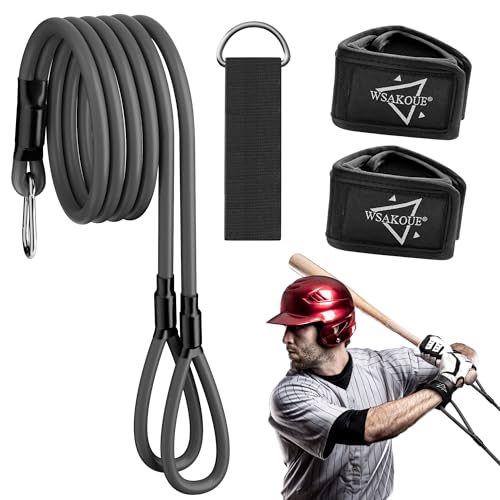
WSAKOUE Baseball Bands, Resistance Bands for Baseball Player and Softball Pitchers, Baseball Pitching Trainer and Arm Trainer for Throwing training, Baseball Training Equipment
Band Exercises for Pitchers: Match Your Throwing Slot at 90
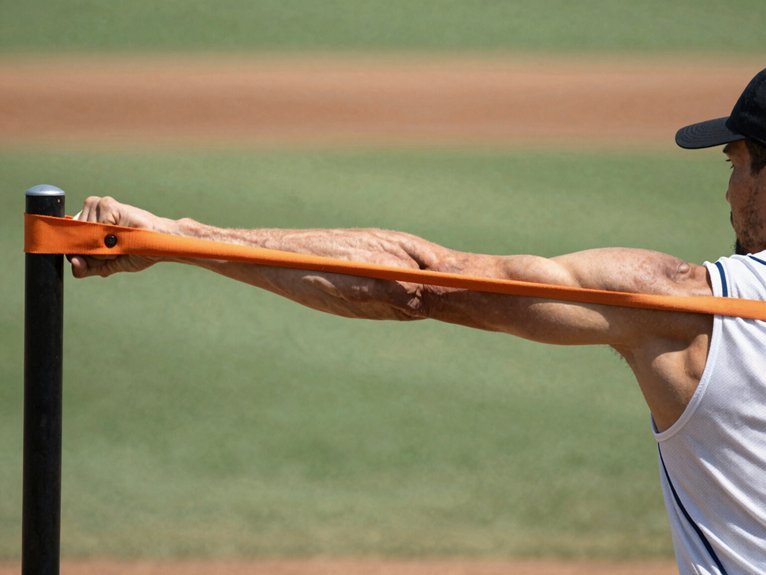
Once you’ve got your posterior cuff locked in at 0 degrees, it’s time to raise the stakes. Now you’re moving into the real work: band exercises at 90 degrees that mirror your actual throwing arc.
Why 90 Degrees Changes Everything
At 90 degrees, your shoulder enters the position it uses on the mound. IR and ER at this angle train your rotator cuff where it matters most. Internal rotation fires up your subscapularis for powerful acceleration. External rotation strengthens your infraspinatus and teres minor, controlling that crucial layback phase.
Keys to Doing It Right
Keep your elbow still and steady. Don’t let your back arch. Use light resistance; you’re building control and endurance, not max strength. These band exercises for pitchers bridge the gap between basic stability and game-ready velocity. Master this progression, and your arm stays healthier, longer.
Recommended Products

5 Level Resistance(3-20pounds): You will get a set of resistance bands including five colors, different colors represent different stretching forces. Each stretch strength (color) is suitable for different exercise levels and different exercise purposes. And unisex.


Upgraded Resistance Band: The product is made of thermoplastic elastomer, and the specially designed anti-slip particles on the handles effectively reduce the risk of slipping. A good stretching strap for both beginners and advanced users looking to enhance their workout routines
Band Exercises for Pitchers: Strengthen Your Decelerators Dynamically
How do you keep your arm healthy when you’re throwing harder than ever? You strengthen your decelerators dynamically with targeted band work.
Your posterior cuff and scapula stabilizers control the arm after release, protecting your elbow safety while supporting pitching velocity. Start with IR/ER bands at 90 degrees to train your subscapularis and teres minor. Add external rotation drills at 0 and 90 degrees to build shoulder stability where you need it most.
Your posterior cuff and scapula stabilizers control the arm after release, protecting your elbow safety while supporting pitching velocity.
The one arm reverse fly targets your posterior shoulder and scapula stabilizers, cutting upper trap dominance while reinforcing deceleration strength. Keep a controlled tempo with light resistance to build endurance, not bulk.
Do 1-2 sets of 10 reps per drill in your pre-throw routine. You’ll activate these muscles without overloading your joints, letting you throw harder with less risk.
Band Exercises for Pitchers: Time Your Scapula-Humerus Connection
Because your scapula and humerus need to move as a team, not solo artists, timing this connection protects your shoulder and adds zip to your throws. Band exercises train this rhythm by hitting your posterior shoulder and waking up your scapular stabilizers.
Try IR/ER at 0 degrees first. Keep your elbow pinned tight, and control the rotation without letting your back arch. This fires your external rotators and builds shoulder timing that holds up late in games.
Add the one arm reverse fly to lock in scapular retraction. You’ll feel your posterior deltoid working hard, keeping your scapula-humerus connection crisp through every pitch.
Sequence these drills before throwing to sync your scapula-ribcage-humerus chain. Better timing equals more velocity and real pitching injury protection. No fancy equipment needed, just a band and focus.
Recommended Products

High End Exercise Bands. Our 12"³ By 2"³ Heavy Duty Loop Resistance Bands Come In 5 Varying Resistance Levels. This Makes Them Perfect Whether You Are Just Starting To Workout Or A Seasoned Workout Warrior. Our Extra Light And Light Bands Are Great For Beginners, While Our Medium, Heavy And Extra Heavy Exercise Bands Are Targeted For More Intermediate And Advanced Strength Training.
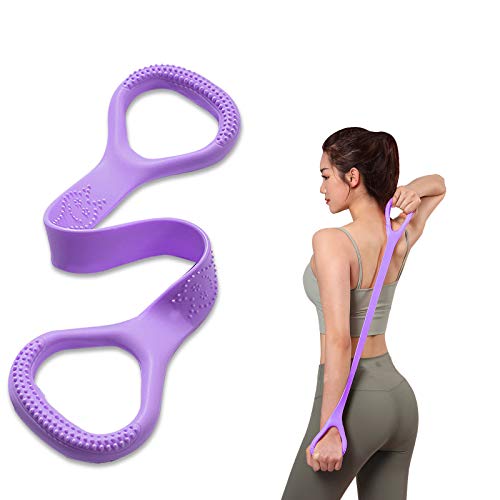
TIPS: PLEASE COMFIRM THE FOGURE 8 RESISTANCE BAND FROM KVITTRA, Kvittra will provide you friendly after-sales service.

Elastic rhythm, quality life: The resistance bands is made of selected elasticity TPE material, which will not slip when sweating during exercise, provides steady, uniform resistance; it resists deformation from repeated use and keeps elasticity long-term