Nearly 70% of young ballplayers quit the sport before high school, and an ill-fitting glove is often the hidden culprit behind their frustration. You’re about to discover why size matters more than brand loyalty, and how one simple measurement can change your child’s confidence on the field.
The difference between a glove that fits and one that fights back might surprise you.
Baseball Glove Sizes by Age: Complete Chart (3–14+)
How do you know which glove your young player actually needs? You’ll find your answer in a solid glove size chart designed for youth baseball.
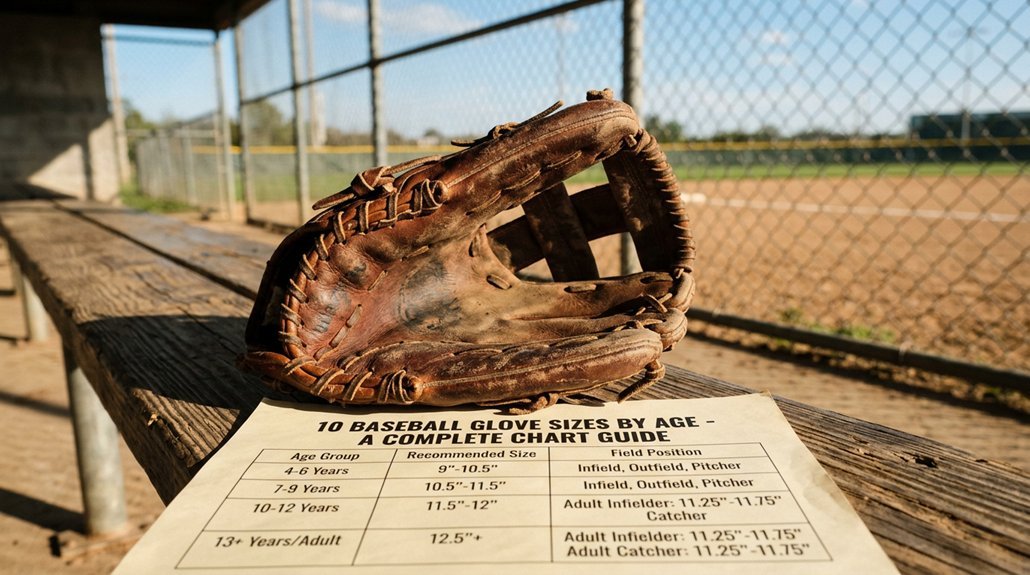
For ages 5–6, you’re looking at 9.00 to 10.50 inches for infield, outfield, and pitcher positions. No first base mitt exists yet for this group. At 7–8, bump up to 10.50–11.25 inches, with catchers grabbing 30.00–31.00 inch mitts.
Ages 9–10 split: infield/pitcher gloves run 10.50–11.50 inches, while outfielders stretch to 11.00–12.00 inches. Catchers need 31.00–32.00 inches, and first basemen finally get specialized mitts at 11.50–12.00 inches.
How to Measure Hand Size for the Right Glove Fit
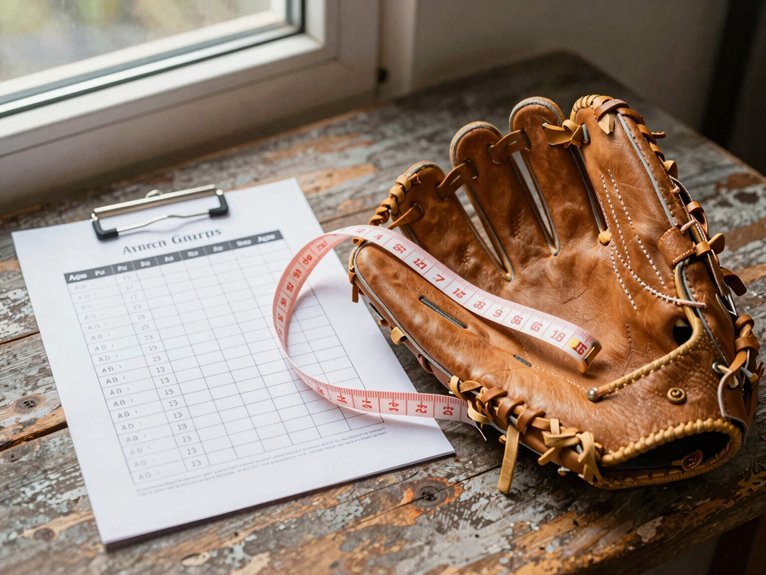
Finding the right size on a chart is only half the battle. You need to know your actual Hand Measurement to match it with the proper Glove Size.
Charts help, but your actual hand measurement is what truly determines the right glove size.
Grab a flexible tape measure. Wrap it around your palm at its widest point, just below your knuckles. Write that number down. Next, measure from the base of your palm to your middle fingertip. These two numbers tell you how Youth Baseball Gloves will fit your hand.
Compare your measurements to standard sizing. A 6-inch palm and 7-inch length typically suits younger players, while older kids need larger dimensions. Don’t guess; you’ll end up with a floppy catcher’s mitt or a stiff infield glove that fights back.
When possible, try gloves on. Your fingers should reach the tips without cramming, and the heel should sit snug against your palm. Comfort equals control on the field.
T-Ball Glove Sizes: Ages 3–6 (8.5–10″)
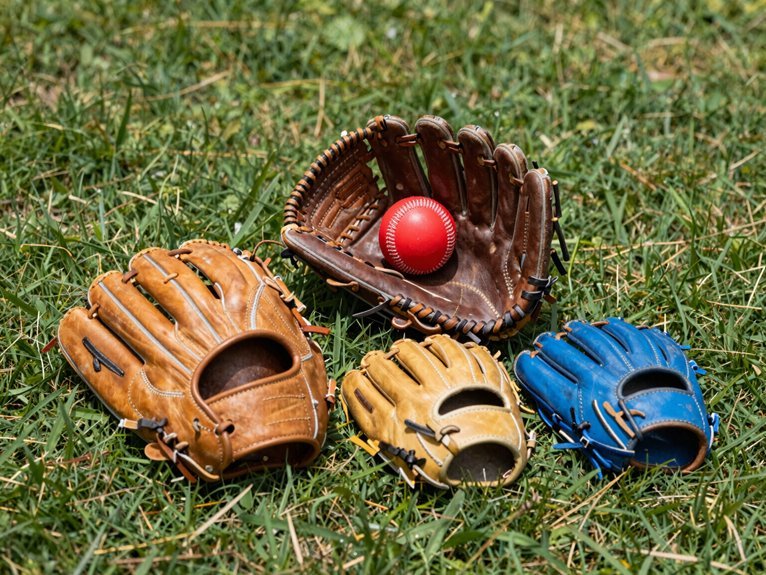
Where do you start when your little one is ready for their first catch? You start with t-ball 8.5–10 inches, the perfect entry point into youth baseball.
Why This Size Works
These glove sizes sit at the smallest end of youth baseball gear for good reason. You want your 3- to 6-year-old building confidence, not struggling with heavy leather. The compact catching surface matches their hand size while leaving enough room for early success.
Key Features to Look For
- Lightweight materials that won’t tire small arms
- Simple Velcro closures for independent dressing
- Soft, flexible leather or synthetic materials
Buying Tips
Shop with your child. Let them squeeze the pocket and practice opening and closing it. You don’t need pro-grade gear here. Focus on fit and fun.
Quick Care
Wipe dirt off after each game. Store loosely stuffed with a ball to maintain shape.
Youth Infield Glove Sizes: Ages 7–12 (10.25–11.5″)
You’ll want to look at youth infield gloves sized 10.25 to 11.5 inches once your player hits ages 7 through 12, since this range gives them the quick hands they need for snagging grounders and turning double plays. These gloves strike a smart balance: the pocket stays shallow enough for fast transfers, yet there’s enough visibility to track the ball on tricky hops.
Keep in mind that hand size and specific position still matter, so don’t skip the try-on even if the age chart points you toward this bracket.
Ideal Age Ranges
How do you know when your young infielder is ready to move up from that starter glove? You’ll see it in their confidence and control. Infield glove sizing for youth baseball gloves follows clear age ranges that match growing hands with positional needs.
Ages 7–9 typically thrive with 10.25–10.75 inch gloves. These smaller sizes let you snag grounders and fire to first without fumbling. Ages 10–12 step up to 11.25–11.5 inches, giving you extra reach without sacrificing quick transfers.
Here’s what guides your choice:
- Match glove length to hand size, not just birthday
- Prioritize lighter weights for faster reactions
- Choose shallower pockets for quick ball release
- Check that fingers reach the glove’s end comfortably
You’ll build better fielding habits when equipment fits right from the start.
Position-Specific Fit
Why does a second baseman and a shortstop often grab different gloves even at the same age? You’ll find the answer in how infield gloves match specific jobs on the dirt.
Youth Infield Glove Sizes: Ages 7–12 (10.25–11.5″)
When you’re picking gear for young players, youth hand size drives everything. Ages 7–8 typically need 10.50–11.25 inches, while 9–12 year olds handle 10.50–11.75 inches comfortably. Check any glove sizing chart, and you’ll see these numbers cluster tight for good reason.
Infield gloves feature shallower pockets and shorter fingers. You snag grounders fast, and you transfer to your throwing hand quicker. That shallow pocket won’t swallow the ball, so you fire to first base without fumbling.
Don’t size up “for growth” here. A loose glove costs you split seconds on double plays. Measure your player’s hand, match it to the chart, and you’ll own the infield with confidence.
Growth Considerations
Sizing up isn’t just about age. It’s about how fast those hands grow and how quickly skills sharpen. You’ll notice your young athlete outgrowing equipment faster than their batting average climbs, so this glove size guide helps you stay ahead of the curve.
For youth players aged 7–12, infield gloves range 10.25–11.5 inches, but growth considerations matter more than birth year. Smaller hands need snugger fits for control, while growing fingers demand room to stretch.
Consider these factors when choosing:
- Hand span measurement, not just age
- Position demands; second base needs quicker transfers than third
- Current skill level versus projected growth
- Budget for mid-season swaps when that growth spurt hits
Check fit every few months. A glove that’s too big today won’t develop proper fielding mechanics.
Youth Outfield Glove Sizes: Ages 7–12 (11.5–12.25″)
Where exactly should you look when you’re tracking a fly ball deep into the gap? You’ll need a glove that extends your reach without sacrificing control, and that’s where youth outfield gloves sized 11.5–12.25 inches come into play.
When tracking a fly ball deep into the gap, youth outfield gloves sized 11.5–12.25 inches extend your reach without sacrificing control.
According to the glove size chart, age 7–12 players thrive with this range. The extra length creates deeper pockets for snagging line drives, while the width helps you secure those tricky sinking hits.
You’ll notice outfield gloves run larger than infield models; this isn’t accidental. The design maximizes your catching radius when you’re playing shallow or racing back to the warning track.
Choose the smaller end if you’re still growing quickly, and size up as your hands develop. Leather quality matters here; softer materials break in faster for busy young athletes.
First Base Mitt Sizes: When to Size Up to 12–13
You’ve got your outfield coverage handled, but now you’re stepping over to first base, where the game changes fast. First Base Mitts run larger than standard infield gloves, and you’ll want to size up to 12–13 inches for maximum advantage. This isn’t just about looking the part; it’s about making those stretch plays and scooping throws in the dirt.
The bigger pocket and reinforced webbing help you snag off-target throws and transfer smoothly to your throwing hand. In youth baseball, glove sizing charts consistently place First Base at 12–13 inches, bridging the gap between infield quickness and outfield reach.
Here’s why this size works for you:
- The 12–13 inch range improves your stretch and range at the bag
- Reinforced webbing adds durability for high-volume catching
- Larger pockets secure hard throws and bad hops
- This size grows with you through competitive play
Size up when you’re ready for more responsibility at first.
Adult Glove Sizes: Transitioning at Age 12
When you hit age 12, you’re stepping into adult glove territory, and it’s time to match your hand size with the right fit. You’ll find infield gloves running 11.25–12 inches, while outfield models stretch from 12–12.75 inches, so your position drives the decision as much as your age.
Focus on balancing how the glove feels on your hand, how deep the pocket sits, and how quickly you can move the ball. You’ll know you’ve found the right match when all three click together.
Age 12 Transition Point
Why does age 12 matter so much for glove shopping? At this age, you’ll notice your hand size and playing style push you toward adult patterns, marking the key age 12 transition in glove sizes.
During this youth to adult sizing shift, you’ll move from youth infield gloves (10.25–11.5 inches) toward adult ranges (11.25–12 inches), while outfield patterns grow from 11.5–12.25 up to 12–12.75 inches. Your catcher’s mitt also expands toward adult circumference measurements.
Here’s what changes at this transition point:
Your infield glove grows by roughly half an inch to match faster play. Outfield patterns lengthen for extended reach on deep flies. Catcher’s mitts jump toward 32–34 inch adult standards. Junior adult sizes offer flexibility if your hands haven’t fully grown.
You’ll want to measure your hand and test fit before buying, since growth rates vary.
Adult Size Ranges
How do you know when you’re ready for adult gloves? You’ll notice your hands have outgrown youth models, typically around age 12 or older. That’s your signal to make the Youth to Adult leap.
Making the Switch
Baseball Glove Sizes for adults start at 11.25 inches and stretch to 12.75 inches. Your position determines where you land. Infield/Outfield needs differ considerably.
Infield gloves run 11.25–12 inches, giving you quick transfers and snappy plays. Outfield gloves measure 12–12.75 inches, offering deeper pockets and extended reach for those diving catches.
Finding Your Fit
Don’t guess your size. Use a Glove Sizing Tool or consult Glove Experts who’ll measure your hand and match you properly. Adult gloves accommodate pitcher and utility roles too, each with tailored dimensions. You’re investing in gear that’ll last seasons, so take time to get it right.
Position-Based Selection
Where exactly should you start when picking your first adult glove? You’ll want to consult a glove size chart that factors in your position, since the youth-to-adult transition isn’t just about bigger hands, it’s about bigger responsibilities on the field.
Position-based selection becomes crucial around ages 11–12. Your infield work demands quick transfers, so you’ll grab an 11.25–12 inch model. Patrolling the outfield? You’ll need 12–12.75 inches to snag those deep flies.
Here’s your position breakdown:
- Infielders: 11.25–12 inches for speedy ball handling
- Outfielders: 12–12.75 inches for maximum reach
- First basemen: 12–13 inches with reinforced pockets
- Catchers: 32.00–35.00 inch circumference mitts, measured differently than standard gloves
Trust the glove size chart, and you’ll nail this youth-to-adult transition with confidence.
Baseball Glove Sizes by Position (Not Just Age)
When you’re picking out a glove, age isn’t the whole ballgame. Your position matters just as much for finding the right fit.
Infield vs. Outfield
You’ll want a smaller glove size for infield work, typically 11.25–12 inches for adults, so you can grab and throw quickly. Outfield gloves run larger, around 12–12.75 inches, giving you extra reach and deeper pockets for those fly balls.
First Base and Utility
First base gloves stretch 12–13 inches, bigger than standard infield patterns to help you scoop throws. Pitchers and utility players often stick with infield sizes but choose closed webs to hide their grip.
Youth Baseball Adjustments
In youth baseball, you’ll see smaller ranges: 9.0–11.5 inches for younger kids, expanding to 11.0–12.5 inches as they grow. Match the position to the glove, and you’re set.
4 Signs Your Child’s Glove Doesn’t Fit (And How to Fix It)
You’ll notice your child’s glove slipping off their hand during catches, or they’ll struggle to snap the pocket shut when fielding grounders. Watch for fingers swimming in stalls that extend past their fingertips, since these three warning signs scream poor fit louder than an ump’s strike call.
Once you spot these issues, you’re ready to size up properly and get them back in the game with gear that actually works.
Glove Slipping Off Hand
Why does your child’s glove keep flying off mid-catch? You’re dealing with a classic glove slipping off hand problem, and it usually means the wrist opening or finger stalls are too roomy. Youth glove fit matters here. Adult gloves simply weren’t built for smaller hands.
Watch for these warning signs:
- The glove slides off during catches, swings, or sprints
- You notice repeated slips even when your child focuses hard
- The wrist opening gaps away from their arm
- They can’t secure the ball because the glove shifts constantly
Fix this by sizing down within youth ranges, grabbing models with reinforced wrist closures, or choosing Pedroia/Contour styles designed for snugger fits. Tighten laces or try a G-Lock Adaptive Fit System during break-in. A secure glove builds confidence fast.
Difficulty Closing Pocket
How’s your child supposed to snag a line drive when their glove fights back every time they squeeze? Poor glove fit turns pocket closure into a daily struggle, and you’ll spot the problem fast.
Why the Pocket Won’t Cooperate
A too-big youth glove size feels floppy in small hands, forcing extra leather to fold where it shouldn’t. The palm can’t generate enough pressure, so the ball rattles around instead of sticking.
Go too small, and you’ll cramp catches while the stressed leather fights back. Either way, misaligned catches and slow transfers kill infield plays.
Fixing the Fit
Check a sizing chart, then match the inches to your player’s age and hand width. Try the next size up or down until the glove snaps shut with natural pressure. Break it in properly, and you’ll mold a pocket that works with you, not against you.
Finger Stalls Too Long
Where do those extra inches of leather go when your child’s fingers stop short? They bunch up in the finger stalls, creating sloppy fit tightness that sabotages every catch. You’ll notice the glove slipping off during plays and the pocket refusing to stay closed when your child transfers to throw.
Here’s how you tackle this problem:
Watch for the glove sliding down your child’s hand during catches. Check if the pocket gapes open when they move to throw. Tighten laces or switch to a secure wrist closure like a G-Lock strap. Size down to youth gloves with shorter finger stalls designed for smaller hands.
If adjustments fail, grab an intermediate model built with compact finger stalls. The right fit keeps fingers seated properly, so your young player controls the ball instead of chasing it.
What If My Child Is Between Glove Sizes?
What happens when your kid’s hand measurements land right in the middle of two glove sizes? You’re dealing with a classic between sizes dilemma, but this age guide has you covered.
Pick the smaller size for lightning-quick transfers. Smaller gloves prevent that floppy, hard-to-control feeling. Size up instead when your child needs more catching surface and growing room.
Check your age guide closely. Ages 9–10 typically handle 10.50–11.50 inches for infield, while outfielders grab 11.00–12.00 inches. At 11–12, those ranges bump to 11.00–11.75 and 11.75–12.50 inches. Borderline glove sizes often work for either position.
Travel players, listen up. You’ll probably need multiple gloves as positions shift. Catchers and first basemen, aim higher on the range. Think 32–34 inch mitts or 12.25–13.00 inch first base gloves for proper pocket depth and reach.