You don’t need to be a pro to find the right glove, but guessing your size will leave you fumbling grounders. Start by matching your age and position to a general range, then grab a tape measure for a quick check.
The real test comes when you slip it on. A proper fit means control, comfort, and fewer errors in the field. Here’s how to get it right in three simple steps.
Find Your Baseball Glove Size by Position and Age First
Where do you start when picking a baseball glove? You’ll want to find your baseball glove size by position and age first, since glove measuring isn’t one-size-fits-all.
Finding the right baseball glove starts with position and age—because one size definitely doesn’t fit all players.
Start with youth glove sizing and age-based sizing guidelines. If you’re under five, you’ll grab an 8-10.5″ glove, while eleven to twelve-year-olds typically swing 11-12″ models. Check a standard sizing chart, though, because brands vary slightly.
Now consider your position-specific glove needs. Your infield glove size runs 11″ to 12.25″, giving you quick ball transfer. Your outfield glove size stretches 12.5″ to 13″ for those diving catches. Pitcher’s gloves hide the ball at 11.75″ to 12″ with closed webs.
First base mitt sizes span 10.5″ to 13″ for scooping throws. Catcher’s mitt size uses circumference, not length, typically 30″ to 35″.
Recommended Products

Full grain pigskin leather: for great durability
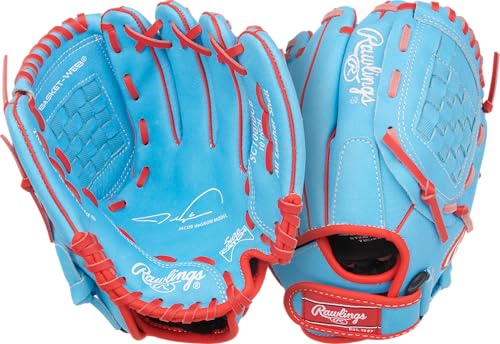
GAME-READY PERFORMANCE | Designed for youth baseball and tee-ball players ages 10 and under, with a soft all-leather shell that’s ready to perform right off the shelf.

IDEAL FOR YOUTH BASEBALL PLAYERS AGES 3-9
Measure Glove Length (or Circumference for Catchers)
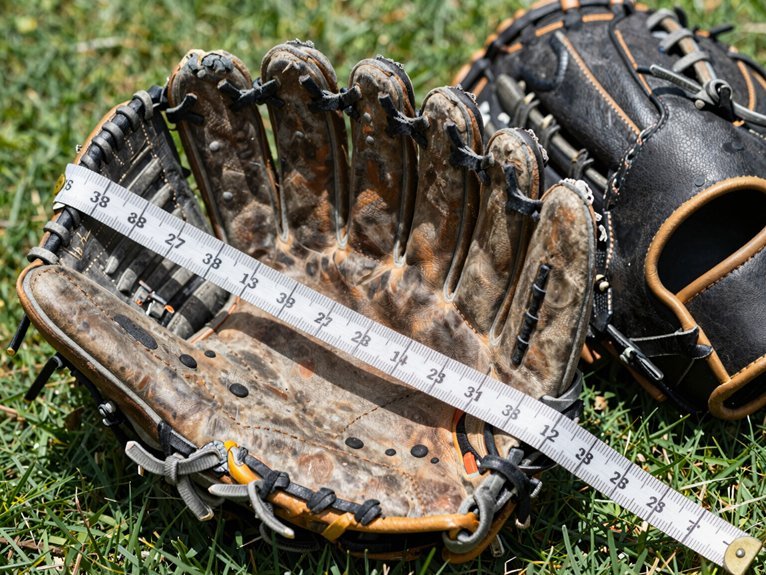
Once you’ve narrowed down your position and age range, you’ll need to confirm the actual measurements. Grab a tape measure and check the glove length from the heel to index finger along the palm leather. This heel-to-index-finger measurement becomes your size if none’s listed.
For pre-construction gloves, flatten that palm leather before measuring, since shaping and lacing will change things later. Youth glove sizing typically runs 11″ to 12″ for infielders, 12.5″ to 13″ for outfielders, and 11.75″ to 12″ for pitchers.
Catchers, you’re special. Your catcher’s circumference skips length entirely. Wrap your tape around the outside, heel back to heel, with the palm flattened. That’s your circumference measurement.
This measurement method handles position-specific sizing across the board. Remember, leather warp happens, so always try before you buy.
Recommended Products

EASY BREAK IN: The soft synthetic leather material is lightweight and responsive, making the glove easy and quick to break in so it will be game-ready in no time for baseball, softball, or teeball

Diamond 6520 D-700 Series 12" Baseball Glove

CLASSIC SANDLOT STYLE | The Rawlings Sandlot Series delivers a timeless vintage look with full-grain oiled shell leather, professional web designs, and a game-ready feel built for players of all ages and experience levels.
Test Fit: Pocket Depth, Flexibility, and Comfort
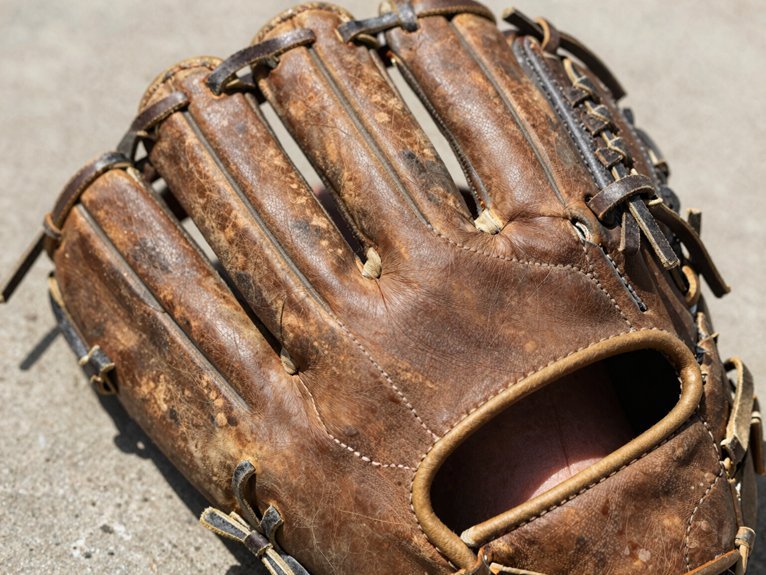
How do you know if a glove will actually perform when it matters? You test fit it properly. Start with your throwing hand and check that finger stalls align without pinching or feeling loose.
Check pocket depth next. A ball should cradle just below the web, deep enough to secure catches but not so deep that transfers slow you down.
Flexibility matters too. New gloves feel stiff, so practice opening and closing to judge hinge action. It’ll loosen with use, but you want smooth movement from day one.
Comfort seals the deal. Your glove size should fit snugly without cutting circulation. It stays put when your hand relaxes, even during quick movements.
For younger players, start smaller to build confidence, then verify pocket depth and webbing for proper ball security.
Recommended Products

Material: Made of high quality thicken PU artificial cowhide. Very pliable, wear-resistant. Despite its light-weight profile, it offers great protection for the player’s hands, easy to close the baseball glove around the ball when you catch it.(Ball not Included)

Material: Made of high quality thicken PU artificial cowhide. Very pliable, wear-resistant. Despite its light-weight profile, it offers great protection for the player’s hands, easy to close the baseball glove around the ball when you catch it.(Ball not Included)

EASY BREAK IN: The soft synthetic leather material is lightweight and responsive, making the glove easy and quick to break in so it will be game-ready in no time for baseball, softball, or teeball