You stand in the sporting goods aisle, staring at a wall of bats, and you realize size matters more than you thought. Pick the wrong one, and you’ll swing late, lose power, or develop bad habits that stick.
The good news? You don’t need a coach or a crystal ball to get this right. You just need your height, your weight, and about thirty seconds of your time.
Here’s how you find your perfect match without striking out.
Find Your Baseball Bat Size by Height and Weight
Where do you start when you’re staring at a wall of baseball bats? You grab the sizing chart and check your height and weight. That’s your launch point.
Height and weight on the sizing chart—that’s your launch point.
The chart maps height ranges from 36-40 inches up to 73+ inches, pairing each bracket with recommended bat lengths. Your weight refines the match. Weigh 60 lbs or less? You’ll likely land on a shorter stick than a heavier teammate of the same height.
Don’t treat the chart as gospel. Swing bats above and below your recommendation. You’ll feel what clicks. Comfort and control matter more than perfect numbers.
Cross-check with the Bat Sizing Chart reference when you’re unsure. Quick guides help you verify your pick without second-guessing yourself.
Use the Interactive Chart to Lock In Bat Length
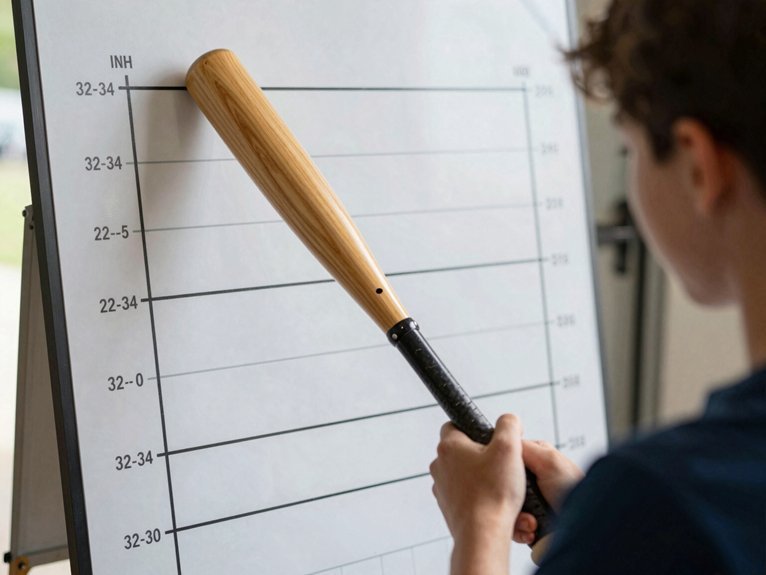
How do you turn height and weight into the perfect bat length? You grab the interactive chart and plug in your numbers. This quick-reference tool instantly matches your measurements to the ideal bat length, whether you’re shopping for youth or adult players.
The chart streamlines your search so you don’t waste time guessing. You can cross-check your results with the Bat Coach feature for personalized recommendations that fit your swing.
Check Your League Rules Before You Shop
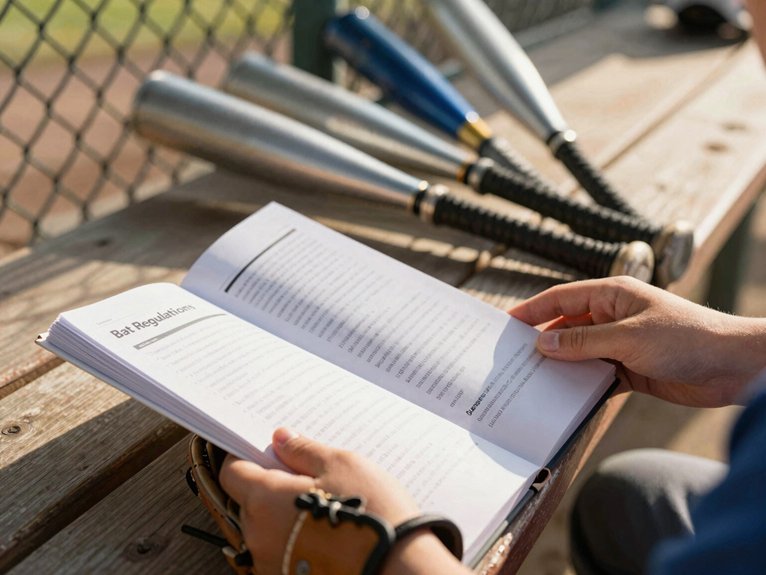
Before you fall in love with a shiny new bat, make sure your league will actually let you swing it. Different leagues enforce different regulations, so a bat that’s legal in one place might sit on the bench in another.
Start by checking your league’s approved bat list. Look for official logos like USABat, BBCOR, or USSSA stamped on the barrel or face; these markings prove the bat meets your league’s standards. Compare your top choices against any size or drop weight limits your league sets.
When regulations seem confusing, don’t guess. Consult league officials or ask Bat Experts for guidance. Confirming compliance before you buy saves you from wasting money on a bat you can’t use. Play it smart, check the rules, then shop with confidence.
Calculate Drop Weight (And Why It Changes Your Swing)
You need to understand drop weight basics before you swing, so grab your calculator and subtract the bat’s weight in ounces from its length in inches.
A smaller drop gives you a heavier bat that builds power for bigger players, while a larger drop keeps things light and quick for smaller athletes chasing bat speed.
Match your size and strength to the right drop, and you’ll control the plate instead of fighting your own equipment.
Drop Weight Basics
Why does the same bat feel totally different in two players’ hands? It comes down to drop weight, the secret math behind bat size. You calculate it by subtracting the bat’s weight in ounces from its length in inches. A 30-inch bat weighing 20 ounces carries a -10 drop.
Drop weight shapes how you swing. Smaller drops feel heavier and suit bigger, stronger players craving power. Larger drops swing lighter, helping smaller players whip the barrel through the zone faster.
For youth players, heavier drops build strength over time, though many kids thrive with the lightest bat they can control.
Test any bat before you buy. Hold your arm straight out for 30 to 45 seconds. If your arm drops or shakes, that drop’s too heavy. When unsure, grab the lightest option your budget allows, then adjust based on comfort and control.
Swing Speed Impact
Swing speed separates good hitters from great ones, and your bat’s drop weight plays a bigger role than you might think. Drop weight equals bat length minus weight in ounces, so a 30″ bat at 20 oz carries a -10 drop. That number directly affects how fast you can whip the barrel through the zone.
Heavier bats create more resistance, slowing your swing speed and making it harder to catch up to fastballs. Many young players grab bats that are too heavy, thinking bigger means better, but you’re actually costing yourself bat control and quickness. A lighter bat with a higher drop weight lets you accelerate faster and square up more pitches.
Test different drops with the same length bat and time your swings. You’ll feel which drop weight gives you the fastest, most controlled swing. Trust that feedback; it’s your best guide.
Player Size Matching
How exactly do you match your body to the right drop weight? You start by understanding that drop weight equals length in inches minus weight in ounces. A 30″ bat at 20 oz carries a -10 drop.
Finding Your Fit
Your size and strength steer this choice. Smaller, stronger players often pick smaller drops for extra power. Larger players typically need greater drop to whip the bat through the zone with speed.
Quick Test
Hold your chosen bat at arm’s length for 30–45 seconds. If your arm shakes or drops, you’ve gone too heavy. The right drop weight works with your bat length, height, and hitting style to keep your swing quick and controlled.
Final Tip
When you’re torn, grab the lightest bat your budget allows. You’ll gain speed without sacrificing the barrel you need.
Do the 30-Second Weight Test at Home
You can quickly check if a bat’s too heavy without ever leaving your living room. Hold the bat straight out at shoulder height, arm fully extended, and time yourself for 30 to 45 seconds. If your arm starts shaking or drops before the timer goes off, you’ll know the bat’s weight is fighting against you.
Quick At-Home Assessment
Where can you quickly tell if a bat’s too heavy without stepping onto the field? Right in your living room, using the 30-second weight test.
The Static Hold Method****
Grab the bat by the handle and extend your arm straight out, parallel to the ground. Hold it steady for 30 to 45 seconds. If your arm drops, shakes, or you’re straining before time’s up, that bat’s too heavy for you. This static hold reveals what swing speed hides: true control.
Understanding Drop Weight****
Drop weight matters too. Subtract the bat’s weight from its length; a 30″ bat at 20 oz gives you a -10 drop. Larger drops mean lighter, faster swings for younger players. Smaller drops pack more punch for bigger, stronger hitters. When in doubt, go lighter, you’ll swing faster and make better contact.
Proper Testing Technique
What’s the simplest way to verify a bat feels right before you ever swing it? The 30-second weight test gives you a quick, reliable answer.
How to Perform the Test
Grab the bat by its handle and extend your arm straight out, keeping the barrel level. Hold this position steady for 30 to 45 seconds. If your arm stays up without shaking or dropping, you’ve found a weight you can control. If the bat dives toward the floor early, it’s too heavy for you.
Why This Test Works
This test checks how the weight feels in your hands, not the bat’s length. A heavier bat can still work if you can manage it. Try this test with multiple bats; the one you hold longest with good form is your winner.
Pair this test with actual swings to confirm your mechanics stay solid.
Interpreting Your Results
How’d your arm hold up during the test? If you couldn’t keep that bat extended for 30 to 45 seconds, it’s too heavy. Simple as that.
Reading the Signs
Notice where you feel the weight. A bat that drags your hand down probably has poor balance, with too much mass crammed into the barrel end. That kills your swing speed.
Drop Weight Decoded
Check the drop weight: length minus weight. Bigger drops mean lighter feel. Youth players usually thrive with -10 or more. Stronger, bigger players often prefer smaller drops for power.
Your Final Call
When you’re stuck, grab the lightest legal bat your budget allows. You’ll control the zone better and build cleaner mechanics. A manageable bat beats a heavy stick every time.
Choose Between Alloy, Composite, or Wood
Match your material to your commitment level and league rules.
Pick One-Piece or Two-Piece for Your Swing Style
Where does your swing need the most help: raw power or smooth control? Your answer determines whether you’ll love a one-piece or two-piece bat.
One-Piece Bats: Power and Stiffness
You’ll feel every bit of energy transfer straight to the ball with a one-piece design. These bats don’t flex much, giving you serious pop and stability through the zone.
The trade-off? Mishits sting your hands something fierce. If you’re strong, confident, and chasing bombs, you’ll appreciate the direct feedback.
Two-Piece Bats: Flex and Forgiveness
You’ll notice the whip immediately. Two-piece bats bend at the connection point, creating faster bat speed and dampening vibrations. Your hands stay happier, and you’ll find the barrel easier to control.
Contact hitters and power guys both enjoy this cushioned feel.
Quick Comparison
| Feature | One-Piece | Two-Piece |
|---|---|---|
| Flex | Minimal | High |
| Vibration | Higher | Lower |
| Best for | Power hitters | All-around comfort |
Match your bat to your swing style, not someone else’s.
Locate the Certification Stamp on Any Bat
You’ll find the certification stamp on the barrel or face of the bat, and it tells you right away if that stick meets USABat, BBCOR, or USSSA standards.
Before you buy, match that logo to your league’s requirements so you don’t get benched before your first swing.
If you can’t spot a clear stamp, don’t guess, check with your coach or league official to confirm what’s legal.
Certification Stamp Location
Wondering if your bat’s ready for game day? You’ll need to locate the certification stamp first. Check the barrel end or near the barrel face, that’s where these marks usually appear.
Look for stamps like USABat, BBCOR, or USSSA. Each one signals different performance standards and age guidelines, so don’t just grab any bat off the shelf. USABat covers youth leagues, while BBCOR applies to high school and college play.
Here’s a pro tip: never peel off wrappers or stickers showing the certification mark until you’ve confirmed your league’s requirements. Those logos aren’t decorations, they’re your proof of compliance.
Always double-check your specific league regulations for your age group and season. Matching your bat’s certification to those rules keeps you in the game and avoids surprises at the plate.
League Standard Labels
Finding the right stamp on your bat keeps you from getting benched before you even step up to the plate. Certification stamps tell you exactly which league standards your bat meets, so you’ll want to locate that logo on the barrel or face before you buy.
Know Your League’s Rules
Different leagues demand different stamps. USABat covers youth baseball, while BBCOR handles high school and college play. USSSA governs its own leagues with separate requirements.
Don’t unwrap your bat until you’ve matched the stamp to your league’s rulebook. A non-compliant bat wastes your money and warms the bench.
Quick Check Before Purchase
- Locate the certification stamp on the barrel
- Verify USABat, BBCOR, or USSSA marking
- Confirm your specific league allows that standard
Always check tournament rules too. That stamp isn’t decoration; it’s your ticket into the game.
Regulation Compliance Check
Where exactly should you look to confirm your bat won’t get waved off at the plate? Check the barrel or face for certification stamps. These marks prove your bat meets league standards, so you’ll play by the rules.
Spot the Right Stamp
Look for USABat stamps on youth bats; they ensure wood-like performance for younger players. For high school and college, you’ll need BBCOR certification, which also guarantees wood-like performance but for adult competition.
USSSA markings appear on bats for their governed leagues, showing proper energy transfer standards.
Smart Buying Tip
Don’t unwrap or remove any logos until you’ve matched stamps to your league’s requirements. Taking off markings can void compliance and waste your money.
Scan these visual cues before purchase, and you’ll step to the plate with confidence every time.
Fix Sizing Problems Without Starting Over
Why keep struggling with a bat that drags through the zone when you don’t have to start from scratch? You can fix sizing problems without ditching your current length entirely.
Tweak the Drop Weight, Keep the Length
If your bat feels heavy or you can’t hold the handle out to the side for 30–45 seconds, you’ve got a weight problem. The drop weight, calculated as length minus weight, lets you adjust heft without changing length. A 30″ bat at 20 oz carries a -10 drop. Switch to a -12 drop, and you’ll shave ounces while keeping that same 30″ length you need.
Bigger, stronger players often prefer smaller drops for power. Smaller players benefit from greater drops for bat speed.
Test multiple bats with your correct length and weight. Let feel and swing comfort drive your choice. When unsure, pick the lightest bat that makes practical sense.
Verify Your Baseball Bat Size Before Checkout
You’ve got your length dialed in and your drop weight sorted, so now it’s time to lock in your choice before you hit that buy button.
Cross-Check Your Stats
Grab the sizing chart and match your height and weight to the recommended length bracket. Scan the height ranges, find your zone, and confirm you’re in the right spot. Tall players need longer bats; lighter players need lighter drops.
Test Before You Invest
Swing a few demo models if you can. Use Bat Coach tools online to double-check your pick feels natural in your hands.
Final Compliance Check
Verify that drop weight gives you quick, controlled speed. Peek at the barrel for league logos and stamps. You don’t want a bat that sits on the shelf, so confirm it meets your competition rules before you pay.